Purpose

I will try my best to provide detailed info on various cars and what is like to live with them, I have already produced a few for Jaguar-car-forums, I will do my best to be unbiased, but it will be hard for some cars. I will re-produce press releases and copy from other motoring news.
Showing posts with label Hyundai i10. Show all posts

Monday, 11 July 2016

The first four months of the year see's the European Small car segment have lots of up's and down's.

European minicar sales – especially at Fiat Chrysler Automobiles -- are getting a lift from the continuing economic rebound in Italy, which is the top market for the region's smallest, most affordable vehicles. Through April, Italy’s minicar sales were up 20 percent to 129,770 vehicles, giving the models a 25 percent share of the market, according to figures from JATO Dynamics.
The car that has benefited most is the Fiat Panda, which has overtaken the Fiat 500 to become the segment's best-seller with a volume of 74,018 units across Europe, an increase of 21 percent.

Rising demand in Italy, as well as growth in Spain and Portugal, have boosted Europe's overall minicar segment by 3.8 percent after four months, but the sector (also called the A-segment) will level off at about 1.2 million annually from 2016 to 2020, analysts at IHS Automotive predict.
IHS believes that demand has stabilized following significant sales increases and decreases between 2009 and 2014. Minicar volume rose to more than 1.6 million in 2009, which is when small, affordable cars became even cheaper to buy because a number of European governments started offering trade-in incentives to support automakers during the height of the global financial downturn. The surge was followed by a decline to about 1.13 million minicar sales in 2013 and 2014 because so many purchases were pulled forward by the incentive offers.
Highs and lows
The recent highs and lows, the predicted flatness of the segment as well as the difficulty most automakers have had turning a profit from minicars has convinced manufacturers such as Ford Motor and Nissan to leave the sector.
Ford will end sales of the Ka after a two-decade run and offer a pair of vehicles in the subcompact segment: the Ka+ and the Fiesta. The Ka+, which is just a few millimeters shorter than the Fiesta, will be Ford’s entry model for Europe. The current Ka shared a platform and factory with the Fiat 500, but it never came close to matching the success of its sibling model. "Either you partner with someone in this segment or you’re out," said a Ford official, who didn’t want to be named.
The Ka+, which is 3929mm long compared with 3620mm for the current Ka, goes on sale in the autumn. Ford says the arrival of the Ka+ allows it to reposition the next-generation Fiesta more upmarket when it debuts early next year. Ford said it will drop the Fiesta's Ambiente base trim line to leave the subcompact segment's entry price level to the Ka+.
Disappointing sales of the Ka, which had a volume of just 12,975 units through April compared with 68,068 for the Fiat 500, was "partly our fault," said a Ford source who declined to be named. "Fiat really turned the 500 into its own brand and we could have done more with the Ka, too. But when you're completely focused on returning to profitability [which Ford of Europe did in 2015 after three years of losses], investing more time and effort into a segment that on good days barely makes money is just not a priority," the source said.
Nissan, meanwhile, is reluctant to rejoin the segment after dropping the India-built Pixo in 2013. "If you look at the volume and expected profit from those vehicles, I'm not convinced there's a significant place for an A-platform car in Europe," Trevor Mann, Nissan's chief performance officer, told Automotive News Europe. Nissan and alliance partner Renault have also said they don't plan to re-engineer the successful India-built Kwid for Europe.
Troubled Twingo?
Renault is struggling in the minicar segment with the rear-wheel-drive Twingo as sales of the car fell by 20 percent to 29,081 in the first four months, according to JATO's figures. The decline dropped the Twingo to fifth place behind the similarly aged Toyota Aygo. The dip came despite the popularity of minicars in Renault's home market of France, which ranks fourth in Europe behind Italy, the UK and Germany. French minicar sales rose 2 percent to 54,415 in the period.
Renault's expectations for the car haven’t been met, said IHS analyst Ian Fletcher. IHS reports that last year Renault cut a shift at its Twingo factory in Novo Mesto, Slovenia, where the car is built alongside its platform mate, the Smart ForFour. Fletcher believes some customer are put off by the Twingo's rear-engine design, which reduces trunk space. Another problem is that the Twingo is facing competition from its larger sibling, the Renault Clio. "Some deals Renault has at the moment don't put the Clio that far away from the Twingo [in price]," Fletcher said.
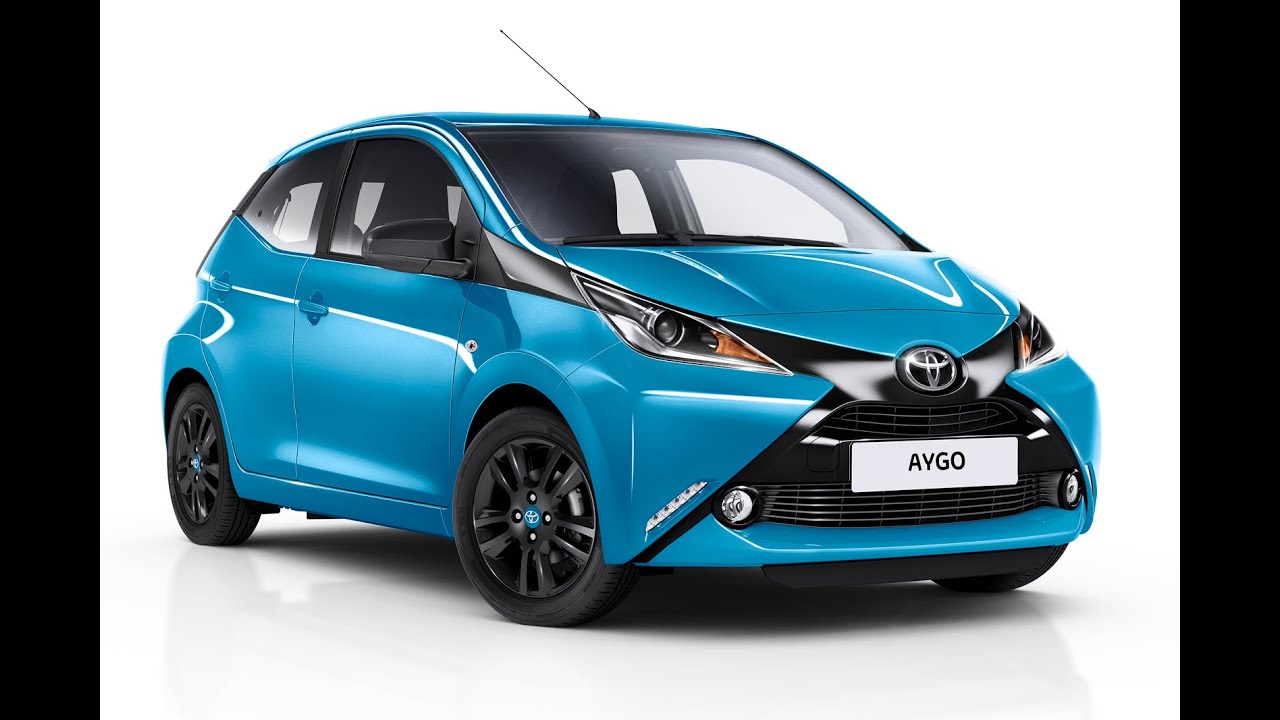
Sales of the Aygo, meanwhile, are holding up because Toyota is meeting strong demand for personalization options. "Customization in that segment is very, very popular," Toyota Europe CEO Johan van Zyl said on the sidelines of the Automotive News Europe Congress in Munich last month. The Aygo's wide choice of colors and features is attracting a younger crowd, van Zyl said.
Other automakers are adapting their models to try to win new buyers. Renault, for example, will launch a GT version of the Twingo later this year that boosts power from the car's 1.2-liter turbocharged gasoline engine to 110 hp compared with 90 hp for the base Twingo.
Volkswagen showed a face-lifted version of the Up at this year's Geneva auto show featuring a 1.0-liter turbocharged TSI gasoline engine for the first time, as well as a dashboard dock for a smartphone to create an inexpensive infotainment system via a VW app.
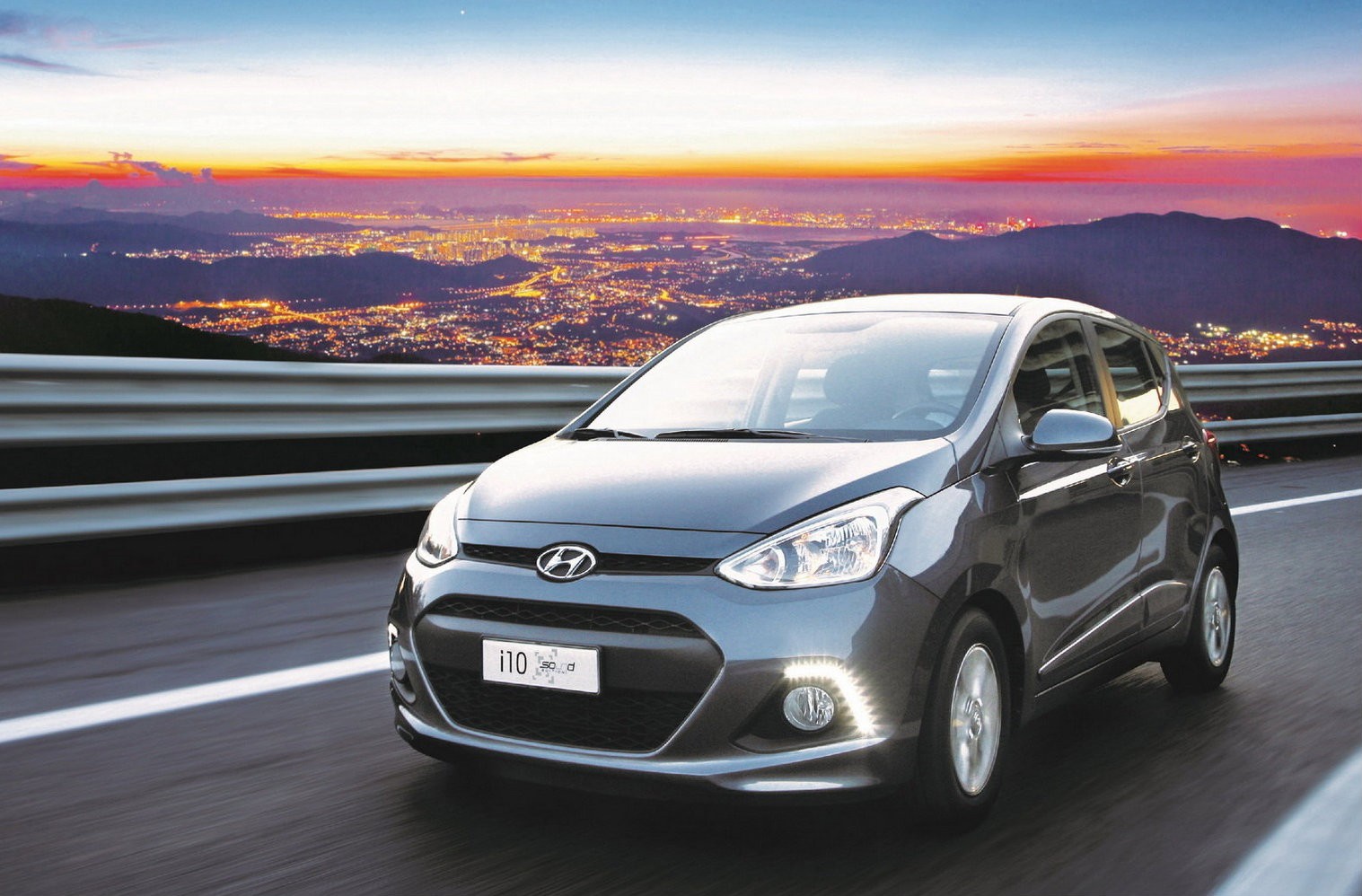
Meanwhile, Hyundai will use the Paris auto show in September to unveil a face-lifted version of its i10 minicar that has been redesigned to attract younger buyers, a company source said.
As the segment's sales level off minicars are expected to have a market share of about 9 percent within Europe, making it the region's third-largest segment after subcompacts and compacts.
That number won't be declining any time soon, JATO Dynamics global analyst Felipe Munoz said: "The segment will always appeal to a variety consumers: first-time car buyers, single people, or simply because of parking reasons," he said. "And it doesn't face direct competition from the SUV segment, at least not for now."
Nick Gibbs
Automotive News Europe

Friday, 29 April 2016

Hyundai i10 recognised as fleet sector’s ‘Best City Car’ for second consecutive year.

  • Hyundai i10 recognised as fleet sector’s ‘Best City Car’ for second consecutive year
  • i10 enhances its position as the brand’s most-awarded car with top business recognition
  • City car’s equipment, practicality, refinement and fuel efficiency continues to impress Fleet World judges
The Hyundai i10 has won ‘Best City Car’ at the 2016 Fleet World Honours for the second consecutive year. Praised for its practicality, generous equipment and competitive running costs, the Hyundai i10 reigned supreme in one of the most competitive categories. 
Hyundai’s strong fleet proposition is founded on low BIK banding and competitive P11D levels, areas in which the i10 excels boasting 16% BIK for its SE Blue 1.0 model.  

Guy Pigounakis, Fleet Director, Hyundai Motor UK, said, “We are immensely proud that the Hyundai i10 continues to impress the fleet industry judges winning the city car category for the second time. Our designers and engineers created a stylish, comfortable and economical city car, which uniquely combines the agility of a small car with the features from the segment above. Reinforced by our 5 Year Unlimited Mileage Warranty, the i10 is a car that continues to prove a hit with our fleet and retail customers alike.”
Alex Grant, Deputy Editor, Fleet World Group said, “The city car segment is one of the most challenging, but the i10 exceeds expectations. It’s chic and fun to drive, yet also well-equipped, practical and offers class-leading refinement. Operators benefit too, with a long warranty, competitive pricing and efficient engines returning up to 65.7mpg. In a tough part of the market, it remains the car to beat.”
Judged entirely by the Fleet World Group editors, the Fleet World Honours are highly regarded by the business community. Fleet managers and user choosers look to the Honours listings to discover the cars that offer the value, comfort and refinement expected by business drivers.
The stylish i10 is available in seven trim levels with a choice of 1.0 or 1.2 petrol engines. The highly efficient 1.0 Blue model boasts combined fuel economy of 65.7mpg and just 98g/km CO2 emissions. Cruise control is fitted as standard on SE models and above, while range-topping models feature Bluetooth connectivity with voice recognition, plus steering wheel audio and phone controls.

Wednesday, 12 August 2015

Fiat's New 500 and Panda dominate the European City Car sales charts, with growth in most models.

Italy’s economic rebound and the arrival of the refreshed Fiat 500 will help pull minicar sales out of a slump that caused the segment to drop to a five-year low in 2014, analysts at IHS Automotive predict.
European minicar sales fell 32 percent to 1,125,160 million in 2014 compared with 2009, with Italy down 50 percent to 244,642 during the period, IHS figures show.
However, the analyst firm predicts that Europe’s overall minicar sales will rise to about 1.2 million this year and 1.25 million next year because the volume in Italy -- Europe’s No. 1 market for the entry-level models -- is poised to increase to 260,000 this year and 300,000 in 2016.
That is still way below the roughly 500,000 minicars, also known as A-segment cars, that were sold in Italy in 2009, when a government-subsidized car-scrapping program artificially inflated demand. Similar schemes, which were used across Europe to boost sales during the height of the global financial crisis, pushed total minicar volume to 1.65 million five years ago.

Fiat’s dominance

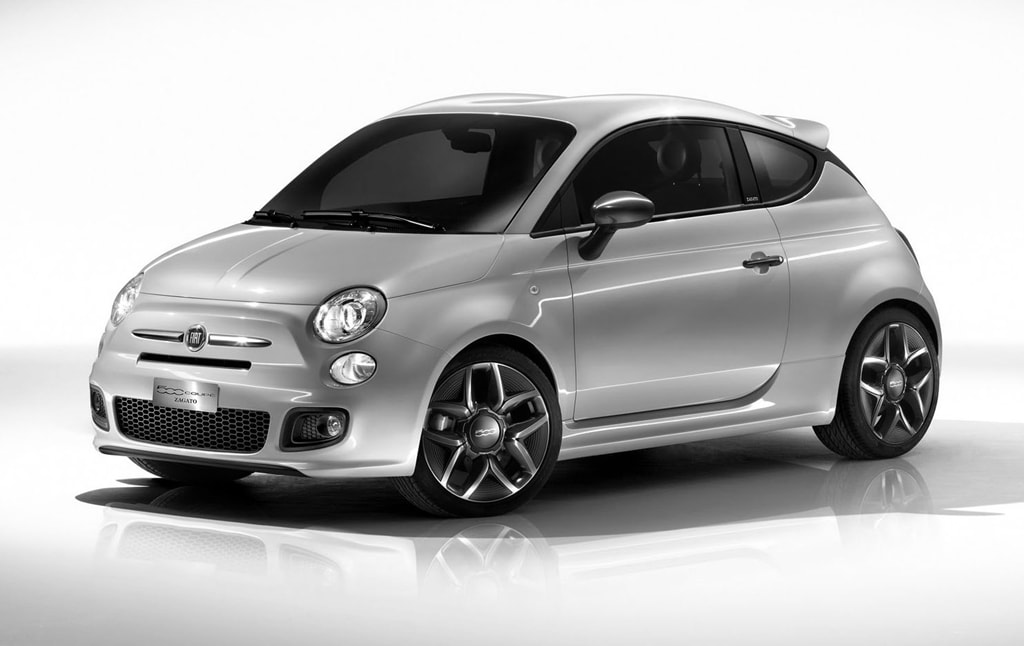
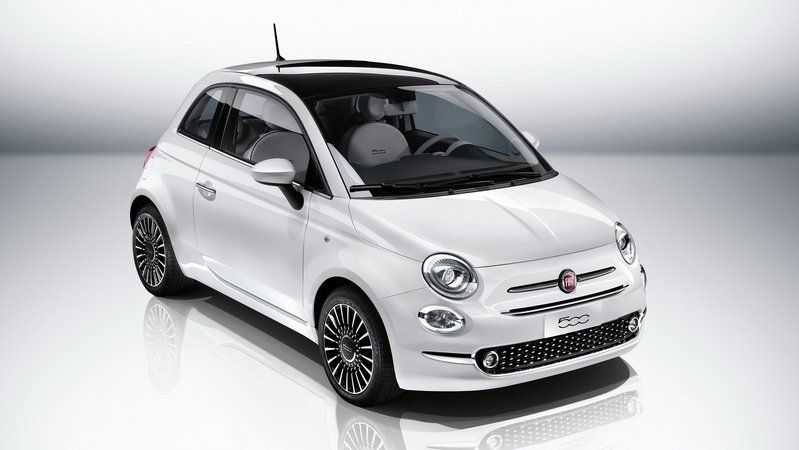
What is expected to drive Italy’s minicar sales rebound is the country’s improving economic climate and the debut of the revised version of the 500, Fiat's higher-end, higher-priced minicar, which is Europe’s best-seller in the segment, according to data from JATO Dynamics.
Fiat also claimed second place in the segment with the more practical, more affordable Panda. European sales of the Panda increased by 11 percent to a little more than 76,000 through May.
The 500 also is a hit outside its home country, ranking as the UK’s best-selling minicar and No. 10 overall after five months, according to figures from the Society of Motor Manufacturers and Traders (SMMT).
Strong demand for the 500 helped make the UK Europe’s No. 2 market for minicars last year, IHS figures show. The UK nearly topped Italy in 2014 as demand rose to 237,138.
Overall UK car sales are being boosted by low interest rates that cut monthly finance figures low enough for buyers like Duncan Watson, a medical equipment salesman from Leighton Buzzard, southern England, who recently chose a new minicar over a second-hand model.
Watson is paying 138 pounds (about 195 euros) a month for a Peugeot 108 that he bought for his daughter, Ellie, on a personal lease from a local dealer. “I only cared about whether I could afford the monthly cost, and tried to get this as low as possible,” he told Automotive News Europe.
The 108’s sister model, the C1, is currently Citroen’s top-selling car in the UK, brand CEO Linda Jackson told Automotive News Europe in June.
Working together
The 108, C1 and Toyota Aygo are the second generation of minicars built at PSA/Peugeot-Citroen and Toyota’s joint venture plant in Kolin, Czech Republic. All three ranked in the bottom half of the European top 10 through May with a combined volume of 97,562.
In April, PSA CEO Carlos Tavares told Reuters he wanted to maintain the French automaker’s minicar arrangement with Toyota, but he indicated an openness to adding partners to further spread costs.
“To make A-segment cars, it‘s better to have the kind of grouping of several [automakers] that are going to share a given investment and then make derivatives out of the common investment,” Tavares said.
Tavares was chief operating officer at PSA’s French rival, Renault, when it teamed up with Daimler to create a joint rear-wheel-drive minicar. The results are the current Renault Twingo, the Smart ForTwo and ForFour, all of which debuted in 2014.
The Twingo was given a more premium styling to better compete with the Fiat 500, a move that has proved to be a success as European sales were up 39 percent to 42,417 in the first five months.
The Twingo’s rise means Renault is poised to retake third place in the segment from the VW Up, which had an 11 percent sales decline in the January to May period.
“New competition in the sector is probably the thing that is harming the Up at the moment,” IHS Automotive principal analyst Ian Fletcher told Automotive News Europe. The Up was launched in late 2011 along with its sister models, the Skoda Citigo and Seat Mii. The minicars are made at VW Group’s factory in Slovakia.
Special models
Of the three, only the Mii has increased sales so far this year, rising 4.4 percent to 10,456. It was helped by growth of the Spanish market and the debut of a new upmarket variant, Seat CEO Juergen Stackmann told journalists during a visit to the UK in July.
The Mii by Mango is a more premium version of the minicar that was created in collaboration with Mango, a Barcelona-based fashion house. The special edition Mii costs 9,480 euros compared with 6,500 euros for an entry-level Mii in Spain.
Stackmann said Seat sold 5,000 units of the model in its first year, with 80 percent being purchased by women. “It was far ahead of our expectations,” he said. “The [Mii’s] average transaction price has gone up tremendously.” IHS expects Spain’s minicar segment to double from a low of 24,558 in 2011 to about 52,000 this year.
The trend for more premium features and higher-end models in the sector also has boosted Opel/Vauxhall’s Adam, which is now available as a three-door hatchback, convertible and as a crossover that is called Adam Rocks.

Sales of the car rose 9 percent to 24,984 in the first five months. In May, Opel added the more practical, less-expensive Karl minicar, which is sold as the Vauxhall Viva in the UK.
“Very few manufacturers have a lineup in the A-B [minicar-subcompact] segment that’s so fresh and able to cater to different subsegments,” Vauxhall Managing Director Tim Tozer told Automotive News Europe. Opel also recently launched the new-generation Corsa subcompact.
Minicars are currently Europe’s third-largest segment and while small SUVs are stealing some sales from the sector, IHS predicts minicar volumes will remain steady at about 1.2 million until 2018. As Citroen CEO Jackson says: “There’s always room for a good cheap small vehicle at the bottom.”
Nick Gibbs

Monday, 1 December 2014

The Hyundai i10 takes Scottish Car Of The Year award.

New compact model is also one of 15 category winners
Hyundai’s i10 small car has won the big trophy at the 2014 Scottish Car of the Year Awards.
It may be one of the smallest contenders in the awards presented by the Association of Scottish Motoring Writers (ASMW), but the Hyundai i10 scored the biggest hit with the expert panel of judges to lift the coveted winner’s quaich at the renowned event at the Fairmont St Andrews. It is also the first car to lift the all-new Scottish Car of the Year trophy, designed and supplied by the Bridge of Weir Leather Company.
Hyundai fought off tough competition to win the Small Car category, which then saw the i10 beat winners from the other tightly contested categories. The category winners come from the following sectors: Small, Family, MPV, Executive, Estate, Crossover, SUV/4x4, Sports, Coupe, Drop-Top, Hot Hatch, Design and Innovation, Electric, Diesel and Used Car.

The evening was a double celebration for BMW, which collected trophies for the 220d in the Diesel category, while the brilliant i3 won in Electric Car.
Demonstrating the breadth of talent among the new cars considered by the judges, no other manufacturer won more than one award. British car makers were represented in fine style by the Jaguar F-TYPE that won the Coupe title, while the stunning McLaren 650S outpaced its rivals to win the Sports award.
Mazda lifted the cup for the Family category with its Mazda3, while the SEAT Leon ST impressed the judging panel with its space and practicality to be voted Estate winner. Citroën’s versatile and attractive Grand C4 Picasso earned the MPV winner’s award, while the Suzuki S-Cross was another car with the right mix of talents to beat all-comers in the Crossover category.
Jeep proved its mix of off-road and on-road abilities was more than enough for the Scottish conditions to win the SUV and 4x4 category. Another all-wheel-drive car to impress was the Volkswagen Golf R, crowned best Hot Hatch.
It may be winter in Scotland, but that didn’t stop the Audi A3 Cabriolet from winning the judges’ hearts to lift the Drop Top title. In the Executive sector, Lexus saw off strong challenges from a number of rivals for its IS to come out on top.
There are two other categories for Scottish Car of the Year which are not eligible for the overall winner’s title. They are the Design and Innovation award and the newly created Used Car award.
Picking up the Design and Innovation award, a category sponsored by the organisers of next year’s Concours of Elegance event in Edinburgh, is the new Jaguar XE. The vehicle was praised for its appearance, extensive use of aluminium and all-new low emissions engines.
The inaugural winner of the ASMW’s Scottish Used Car of the Year award is the Ford Focus, which in its original guise was named as the recipient of the very first Scottish Car of the Year title in 1998. As a used car the current version offers buyers on any budget a superbly practical family car with low running costs and plenty of driving fun.
Alisdair Suttie, President of the Association of Scottish Motoring Writers, said: “Looking at the list of nominees and category winners, it’s clear it would take something special to win overall and the Hyundai i10 has everything. Great value, practical, affordable to own and hugely enjoyable to drive, it’s the perfect small car. Hyundai can feel justifiably proud of themselves to have won Scottish Car of the Year.
“All of the other category winners can also give themselves a well-earned pat on the back as the judges are a tough bunch to please. Whether it’s a supercar or used car, the ASMW members are always looking for the car that best suits the needs of its owner.’
Receiving the award for Hyundai, Tony Whitehorn, President and CEO of Hyundai Motor UK, added: “i10 has gone from strength to strength in 2014, impressing previous generation owners whilst simultaneously attracting new customers in the 11 months it has been on sale. I would like to thank the Scottish Group of Motoring Writers for recognising i10 as the overall Scottish Car of the Year – it is a privilege to accept this award for the first time in the history of Hyundai Motor UK. It’s a testament to the brand’s progress in the last five years and a huge boost at the end of a remarkable year.”
The SCOTY Hall of Fame
1998: Ford Focus
1999: Jaguar S-Type
2000: Audi A2
2001: Jaguar X-Type
2002: Mazda6
2003: Volvo XC90
2004: Peugeot 407
2005: BMW 3 Series
2006: Jaguar XK
2007: Ford Mondeo
2008: Ford Fiesta
2009: Land Rover Discovery 4
2010: Kia Sportage
2011: Range Rover Evoque
2012: Dacia Duster
2013: Volkswagen Golf
2014: Hyundai i10