Purpose

I will try my best to provide detailed info on various cars and what is like to live with them, I have already produced a few for Jaguar-car-forums, I will do my best to be unbiased, but it will be hard for some cars. I will re-produce press releases and copy from other motoring news.
Showing posts with label toyota aygo. Show all posts

Monday, 11 July 2016

The first four months of the year see's the European Small car segment have lots of up's and down's.

European minicar sales – especially at Fiat Chrysler Automobiles -- are getting a lift from the continuing economic rebound in Italy, which is the top market for the region's smallest, most affordable vehicles. Through April, Italy’s minicar sales were up 20 percent to 129,770 vehicles, giving the models a 25 percent share of the market, according to figures from JATO Dynamics.
The car that has benefited most is the Fiat Panda, which has overtaken the Fiat 500 to become the segment's best-seller with a volume of 74,018 units across Europe, an increase of 21 percent.

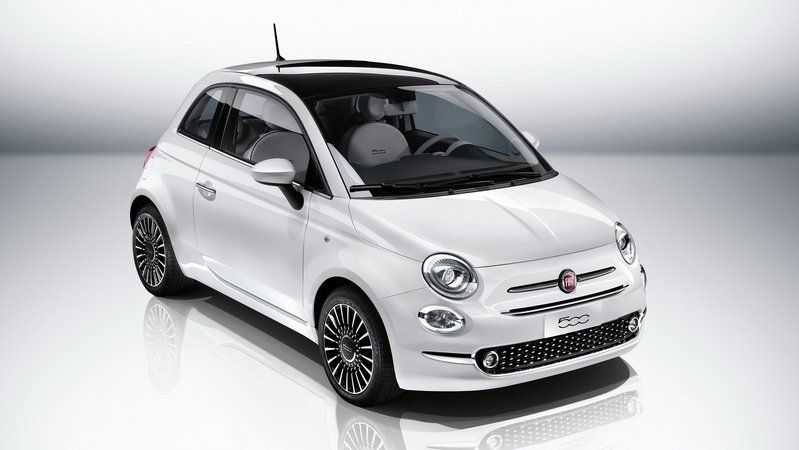
Rising demand in Italy, as well as growth in Spain and Portugal, have boosted Europe's overall minicar segment by 3.8 percent after four months, but the sector (also called the A-segment) will level off at about 1.2 million annually from 2016 to 2020, analysts at IHS Automotive predict.
IHS believes that demand has stabilized following significant sales increases and decreases between 2009 and 2014. Minicar volume rose to more than 1.6 million in 2009, which is when small, affordable cars became even cheaper to buy because a number of European governments started offering trade-in incentives to support automakers during the height of the global financial downturn. The surge was followed by a decline to about 1.13 million minicar sales in 2013 and 2014 because so many purchases were pulled forward by the incentive offers.
Highs and lows
The recent highs and lows, the predicted flatness of the segment as well as the difficulty most automakers have had turning a profit from minicars has convinced manufacturers such as Ford Motor and Nissan to leave the sector.
Ford will end sales of the Ka after a two-decade run and offer a pair of vehicles in the subcompact segment: the Ka+ and the Fiesta. The Ka+, which is just a few millimeters shorter than the Fiesta, will be Ford’s entry model for Europe. The current Ka shared a platform and factory with the Fiat 500, but it never came close to matching the success of its sibling model. "Either you partner with someone in this segment or you’re out," said a Ford official, who didn’t want to be named.
The Ka+, which is 3929mm long compared with 3620mm for the current Ka, goes on sale in the autumn. Ford says the arrival of the Ka+ allows it to reposition the next-generation Fiesta more upmarket when it debuts early next year. Ford said it will drop the Fiesta's Ambiente base trim line to leave the subcompact segment's entry price level to the Ka+.
Disappointing sales of the Ka, which had a volume of just 12,975 units through April compared with 68,068 for the Fiat 500, was "partly our fault," said a Ford source who declined to be named. "Fiat really turned the 500 into its own brand and we could have done more with the Ka, too. But when you're completely focused on returning to profitability [which Ford of Europe did in 2015 after three years of losses], investing more time and effort into a segment that on good days barely makes money is just not a priority," the source said.
Nissan, meanwhile, is reluctant to rejoin the segment after dropping the India-built Pixo in 2013. "If you look at the volume and expected profit from those vehicles, I'm not convinced there's a significant place for an A-platform car in Europe," Trevor Mann, Nissan's chief performance officer, told Automotive News Europe. Nissan and alliance partner Renault have also said they don't plan to re-engineer the successful India-built Kwid for Europe.
Troubled Twingo?
Renault is struggling in the minicar segment with the rear-wheel-drive Twingo as sales of the car fell by 20 percent to 29,081 in the first four months, according to JATO's figures. The decline dropped the Twingo to fifth place behind the similarly aged Toyota Aygo. The dip came despite the popularity of minicars in Renault's home market of France, which ranks fourth in Europe behind Italy, the UK and Germany. French minicar sales rose 2 percent to 54,415 in the period.
Renault's expectations for the car haven’t been met, said IHS analyst Ian Fletcher. IHS reports that last year Renault cut a shift at its Twingo factory in Novo Mesto, Slovenia, where the car is built alongside its platform mate, the Smart ForFour. Fletcher believes some customer are put off by the Twingo's rear-engine design, which reduces trunk space. Another problem is that the Twingo is facing competition from its larger sibling, the Renault Clio. "Some deals Renault has at the moment don't put the Clio that far away from the Twingo [in price]," Fletcher said.
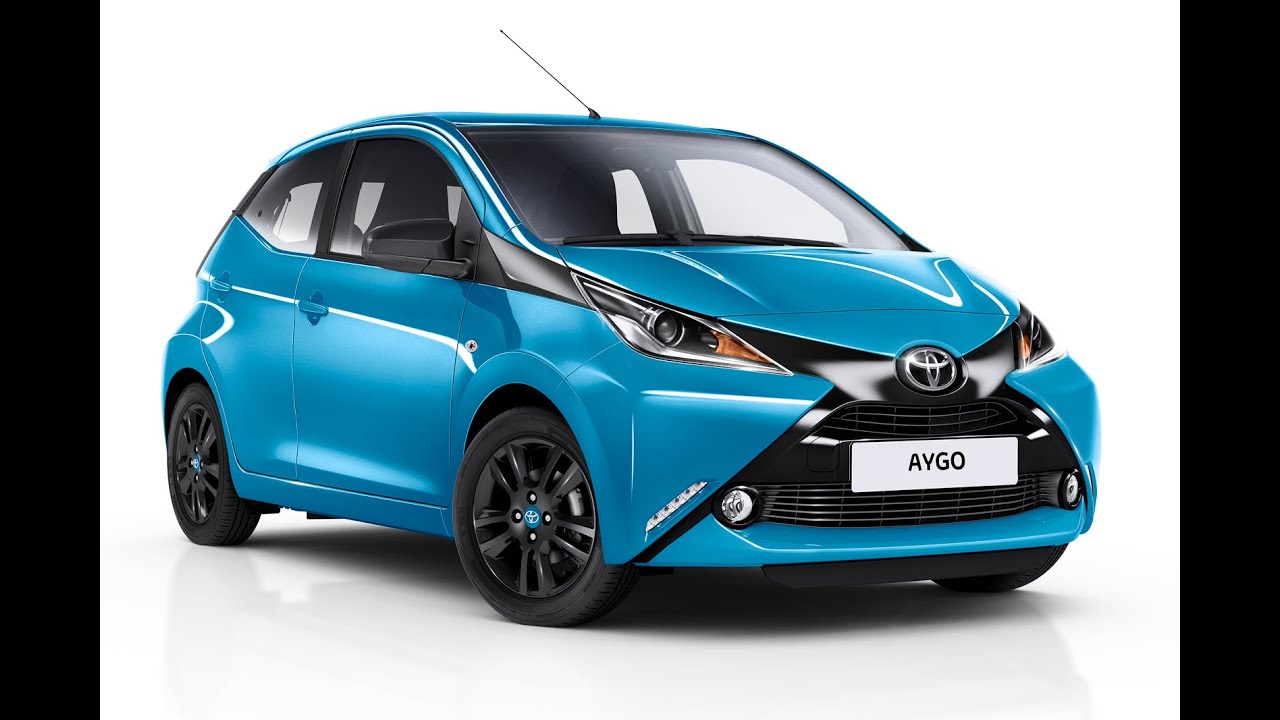
Sales of the Aygo, meanwhile, are holding up because Toyota is meeting strong demand for personalization options. "Customization in that segment is very, very popular," Toyota Europe CEO Johan van Zyl said on the sidelines of the Automotive News Europe Congress in Munich last month. The Aygo's wide choice of colors and features is attracting a younger crowd, van Zyl said.
Other automakers are adapting their models to try to win new buyers. Renault, for example, will launch a GT version of the Twingo later this year that boosts power from the car's 1.2-liter turbocharged gasoline engine to 110 hp compared with 90 hp for the base Twingo.
Volkswagen showed a face-lifted version of the Up at this year's Geneva auto show featuring a 1.0-liter turbocharged TSI gasoline engine for the first time, as well as a dashboard dock for a smartphone to create an inexpensive infotainment system via a VW app.
Meanwhile, Hyundai will use the Paris auto show in September to unveil a face-lifted version of its i10 minicar that has been redesigned to attract younger buyers, a company source said.
As the segment's sales level off minicars are expected to have a market share of about 9 percent within Europe, making it the region's third-largest segment after subcompacts and compacts.
That number won't be declining any time soon, JATO Dynamics global analyst Felipe Munoz said: "The segment will always appeal to a variety consumers: first-time car buyers, single people, or simply because of parking reasons," he said. "And it doesn't face direct competition from the SUV segment, at least not for now."
Nick Gibbs
Automotive News Europe

Wednesday, 12 August 2015

Fiat's New 500 and Panda dominate the European City Car sales charts, with growth in most models.

Italy’s economic rebound and the arrival of the refreshed Fiat 500 will help pull minicar sales out of a slump that caused the segment to drop to a five-year low in 2014, analysts at IHS Automotive predict.
European minicar sales fell 32 percent to 1,125,160 million in 2014 compared with 2009, with Italy down 50 percent to 244,642 during the period, IHS figures show.
However, the analyst firm predicts that Europe’s overall minicar sales will rise to about 1.2 million this year and 1.25 million next year because the volume in Italy -- Europe’s No. 1 market for the entry-level models -- is poised to increase to 260,000 this year and 300,000 in 2016.
That is still way below the roughly 500,000 minicars, also known as A-segment cars, that were sold in Italy in 2009, when a government-subsidized car-scrapping program artificially inflated demand. Similar schemes, which were used across Europe to boost sales during the height of the global financial crisis, pushed total minicar volume to 1.65 million five years ago.

Fiat’s dominance

What is expected to drive Italy’s minicar sales rebound is the country’s improving economic climate and the debut of the revised version of the 500, Fiat's higher-end, higher-priced minicar, which is Europe’s best-seller in the segment, according to data from JATO Dynamics.
Fiat also claimed second place in the segment with the more practical, more affordable Panda. European sales of the Panda increased by 11 percent to a little more than 76,000 through May.
The 500 also is a hit outside its home country, ranking as the UK’s best-selling minicar and No. 10 overall after five months, according to figures from the Society of Motor Manufacturers and Traders (SMMT).
Strong demand for the 500 helped make the UK Europe’s No. 2 market for minicars last year, IHS figures show. The UK nearly topped Italy in 2014 as demand rose to 237,138.
Overall UK car sales are being boosted by low interest rates that cut monthly finance figures low enough for buyers like Duncan Watson, a medical equipment salesman from Leighton Buzzard, southern England, who recently chose a new minicar over a second-hand model.
Watson is paying 138 pounds (about 195 euros) a month for a Peugeot 108 that he bought for his daughter, Ellie, on a personal lease from a local dealer. “I only cared about whether I could afford the monthly cost, and tried to get this as low as possible,” he told Automotive News Europe.
The 108’s sister model, the C1, is currently Citroen’s top-selling car in the UK, brand CEO Linda Jackson told Automotive News Europe in June.
Working together
The 108, C1 and Toyota Aygo are the second generation of minicars built at PSA/Peugeot-Citroen and Toyota’s joint venture plant in Kolin, Czech Republic. All three ranked in the bottom half of the European top 10 through May with a combined volume of 97,562.
In April, PSA CEO Carlos Tavares told Reuters he wanted to maintain the French automaker’s minicar arrangement with Toyota, but he indicated an openness to adding partners to further spread costs.
“To make A-segment cars, it‘s better to have the kind of grouping of several [automakers] that are going to share a given investment and then make derivatives out of the common investment,” Tavares said.
Tavares was chief operating officer at PSA’s French rival, Renault, when it teamed up with Daimler to create a joint rear-wheel-drive minicar. The results are the current Renault Twingo, the Smart ForTwo and ForFour, all of which debuted in 2014.
The Twingo was given a more premium styling to better compete with the Fiat 500, a move that has proved to be a success as European sales were up 39 percent to 42,417 in the first five months.
The Twingo’s rise means Renault is poised to retake third place in the segment from the VW Up, which had an 11 percent sales decline in the January to May period.
“New competition in the sector is probably the thing that is harming the Up at the moment,” IHS Automotive principal analyst Ian Fletcher told Automotive News Europe. The Up was launched in late 2011 along with its sister models, the Skoda Citigo and Seat Mii. The minicars are made at VW Group’s factory in Slovakia.
Special models
Of the three, only the Mii has increased sales so far this year, rising 4.4 percent to 10,456. It was helped by growth of the Spanish market and the debut of a new upmarket variant, Seat CEO Juergen Stackmann told journalists during a visit to the UK in July.
The Mii by Mango is a more premium version of the minicar that was created in collaboration with Mango, a Barcelona-based fashion house. The special edition Mii costs 9,480 euros compared with 6,500 euros for an entry-level Mii in Spain.
Stackmann said Seat sold 5,000 units of the model in its first year, with 80 percent being purchased by women. “It was far ahead of our expectations,” he said. “The [Mii’s] average transaction price has gone up tremendously.” IHS expects Spain’s minicar segment to double from a low of 24,558 in 2011 to about 52,000 this year.
The trend for more premium features and higher-end models in the sector also has boosted Opel/Vauxhall’s Adam, which is now available as a three-door hatchback, convertible and as a crossover that is called Adam Rocks.

Sales of the car rose 9 percent to 24,984 in the first five months. In May, Opel added the more practical, less-expensive Karl minicar, which is sold as the Vauxhall Viva in the UK.
“Very few manufacturers have a lineup in the A-B [minicar-subcompact] segment that’s so fresh and able to cater to different subsegments,” Vauxhall Managing Director Tim Tozer told Automotive News Europe. Opel also recently launched the new-generation Corsa subcompact.
Minicars are currently Europe’s third-largest segment and while small SUVs are stealing some sales from the sector, IHS predicts minicar volumes will remain steady at about 1.2 million until 2018. As Citroen CEO Jackson says: “There’s always room for a good cheap small vehicle at the bottom.”
Nick Gibbs

Sunday, 13 July 2014

Citroen C1, the start of a new future for the French brand.

  • Citroën launches New C1 in the UK
  • On sale from 1 July 2014, priced from £8,245 to £11,935 (MRRP OTR)
  • New Airscape versions feature a retractable roof for an open-top driving experience
  • Latest-generation petrol powerplants deliver up to 74.3mpg & just 88g/km CO2
  • First Citroën to offer Mirror Screen technology for advanced smartphone connectivity
The New Citroën C1 is the latest generation of the popular city car that has sold more than 780,000 examples worldwide since launch in 2005.
With a cheerful personality, attractive styling and impressive efficiency, the New Citroën C1 delivers an upbeat response to today’s urban mobility requirements and reflects the bold renewal of the Citroën brand. The New C1 is available as both three and five-door versions as a hatchback and as a new open-top body style, named Airscape.
Highlights include;
  • More design with dynamic lines and a cheerful front-end gaze characterised by the eye-catching headlights.
  • Airscape models can be finished in bi-tone colour schemes and brightly coloured interiors underline the car’s playful character.
  • Greater comfort for everyday driving. Agile and nippy, the New C1 marries compact exterior dimensions (just 3.46m long, 1.62m wide, 1.46m tall) for easy handling and a turning circle radius of 4.80m, with a spacious cabin for up to four adults and a 196-litre boot.
  • Ride comfort and handling are improved compared to its predecessor.
  • More useful technology, including a 7-inch Touch Drive interface and Mirror Screen technology that allows the driver to run selected smartphone apps from the touch screen.
  • Keyless entry and start, and a reversing camera are available.
  • Hill Start Assist is standard specification.
  • Optimised running costs, thanks to a lightweight design and efficient new-generation petrol engines, placing New C1 among the best-in-class for fuel economy.
The New Citroën C1 is on sale now in the UK with prices starting at £8,245.
Three trim levels are offered – Touch, Feel and Flair.
Airscape models are available in Feel and Flair trim.

BUYER PROFILE
The New Citroën C1 is positioned in the A segment (city cars). Buyers in this sector span all generations, with the highest representation amongst younger buyers. Customers are motivated by a combination of affordability, efficiency, attractive styling and driving pleasure.

Two main customer demographics are anticipated for the New Citroën C1;
The first will be young drivers, typically under 30, the majority being female. They are looking for a stylish and affordable city car that is economical to run and fun to drive.
The second group are older couples looking to downsize both economically and practically.
For all buyers, the New Citroën C1 will represent both the ‘smart’ choice, combining comfort, economy and functionality and the ‘fun’ choice, with customisable style, the latest technology and an enjoyable driving experience.
http://www.newspress.co.uk/downloads/mediumQuality/332608/5770.jpg

IRRESISTIBLE STYLING
The New Citroën C1 combines a dynamic, lively design with a spacious, colourful interior and compact exterior dimensions. The styling is underlined by the seemingly continuous glass area from the windscreen into the side windows, with black windscreen pillars and depending on the trim level, chrome-finished weather strips and dark tinted rear windows.

The front features all the key characteristics of the brand’s newest models, with a new two-part headlamp signature and integrated LED daytime running lights creating a smiling front-end gaze in addition to emphasising the car’s cheerful design and strong character.
The lighting effects continue at the rear, with a glass tailgate and the newly designed square light clusters demonstrating a striking 3D effect.
The New Citroën C1 is available in eight exterior colours (including four metallic shades) – Smalt Blue (M), Caldera Black (M), Gallium Grey (M), Carlinite Grey (M), Tapenade Grey, Lipizzan White, Scarlet Red and Sunrise Red, which can be personalised with a choice of chrome door mirrors and door handles on the Flair trim level.
For a touch of urban chic, 14 or 15-inch wheels and covers, and 15-inch diamond-tipped alloys are available.
The interior of the New Citroën C1 is bright and airy with a colourful ambience. With clean, structured lines, the dashboard can feature bright colours on the multimedia panel, air vents and gear lever base. A leather-trimmed steering wheel is also fitted as standard on Flair versions.
AIRSCAPE
The Airscape open-top body style is a new alternative for this popular model and is available with both three and five-door models for an even more enjoyable driving experience and a greater sense of fun.

The exceptionally large canvas soft-top (800mm x 760mm) runs practically the entire length of the roof, is fully opening and electrically controlled as standard. The switch is located in the ceiling panel and the roof can be opened or closed when the car is at a standstill or driving at legal motorway speeds.
An aero-acoustic deflector deploys when the roof is opened to maintain acoustic comfort by limiting in-cabin turbulence. With the roof closed, acoustic comfort is the same as the hatchback version.
Airscape versions can be finished with a bi-tone look. To contrast with the body colour, the roof is available in a choice of three colours – Sunrise Red, Black or Grey.
EASY LIVING
Despite being one of the most compact city cars on the market, the New Citroën C1 is both versatile and practical, carrying up to four adults in comfort, with a spacious front and rear.

The three and five-door versions maintain nimble dimensions with a tight turning circle radius of 4.80m and electric power steering for easy handling – ideal for city parking and manoeuvring.
The New Citroën C1 also combines dynamic, vibrant styling with everyday useful features and an ergonomic design.
The seats have been completely redesigned to improve comfort compared to the previous generation. The new seats boast ergonomic, body-hugging shapes and enhanced side support with new levels of adjustment.
There are storage compartments throughout the cabin, cup-holders and a glovebox with a lid for greater peace-of-mind.
The functional 196-litre boot is easy to access, with the parcel shelf folding away with the tailgate when it is opened. Folding the rear seats increases load capacity to an impressive 780-litres.
The New Citroën C1 offers a range of comfort features, such as automatic air conditioning – a first on the C1 range – and, on 3-door versions, memory settings for the front seats.
USEFUL TECHNOLOGIES
The New Citroën C1 features intuitive, easy-to-use technologies.

It is available with a 7-inch Touch Drive interface that groups together all of the car’s media functions (radio, telephone, on-board computer).
The New C1 is Citroën’s first model to feature Mirror Screen technology, which offers an advanced connectivity solution. This function allows the motorist to copy their smartphone content onto the 7-inch Touch Drive interface for easy display and control.
Users install an app enabling them to connect to and share data via the car’s USB port, they can then access their smartphone’s various functions using the touchscreen. Mirror Screen draws on two technologies – AppinCar developed by Pioneer for iPhone users, and MirrorLink technology, developed by Car Connectivity Consortium for other smartphone brands (Samsung etc.).
Once installed, the motorist can take full advantage of a range of smartphone apps from the 7-inch Touch Drive interface – navigation, telephone, address book, music, web radio and any other useful driving-compatible functions.
A range of on-board technology is also available to make driving easier.
A reversing camera, which projects images onto the 7-inch screen, simplifies manoeuvres such as parking in tight spaces.
Keyless entry and start enables the driver to access and start the car without taking out the electronic key – convenient technology typically seen on more premium models.
Hill-start assist is standard specification across the range. This feature holds the car stationary for two seconds for an easy re-start on slopes with a gradient of over 3%.
A speed limiter and steering mounted controls are also available.
ON-ROAD COMFORT
The New Citroën C1 sets high standards for road handling and ride comfort.

The rear axle is 4kg lighter compared to the previous-generation model, there are new suspension springs, new shock absorbers and a new large-diameter anti-roll bar. These changes improve both suspension comfort and road holding.
A new electric power steering system delivers a precise and enjoyable drive with smooth, satisfying and well controlled steering both in the city and on the open road.
At the same time, new tyres with very low rolling resistance and compact dimensions (14 and 15-inches) contribute to the car’s effective braking performance and its low fuel consumption.
ABS, EBA, ESC, Cornering Stability Control, six airbag and two rear Isofix mounting points are standard equipment and finish a specification that ensures an enjoyable, safe and relaxed driving experience for everyone on board.
OPTIMISED RUNNING COSTS
The New Citroën C1 combines competitive price positioning with optimised running costs.

With a lightweight design (855 – 865kg), very low rolling resistance tyres and Citroën’s latest-generation petrol engines, it is exceptionally efficient and delivers low servicing costs. Sub-100g/km CO2 across the range also exempts all models from VED.
With the VTi 68 engine with Stop & Start technology mated to a 5-speed manual gearbox, the New Citroën C1 is amongst the best-in-class for fuel economy, with up to 74.3mpg on a combined cycle and just 88g/km of CO2.
The VTi 68 engine (non-Stop & Start) can be specified with a manual 5-speed gearbox and with the option of an automated manual 5-speed ETG (Efficient Tronic Gearbox). The ETG system features a creep function and optimised pedal mapping, adjusting power effectively for smoother gear changes.
A new choice of power from the PureTech engine family is also offered. This 1.2-litre, 3-cylinder, 82hp petrol engine uses innovative technologies to achieve fuel economy of 65.7mpg (combined cycle) and just 99g/km CO2. This is combined with rewarding performance, including torque of 116 Nm at 2,750rpm and a 0-62mph acceleration time of 11 seconds.
ADDITIONAL INFORMATION
The New C1 sales split is forecast to be approximately 63% retail and 37% fleet/business.

A New C1 Special Edition is available immediately from launch priced at £10,945 OTR. The C1 Airscape Feel Edition is based on a C1 Airscape Feel VTi 68 5-door, but with additional features;
  • 15-inch 'Planet' alloy wheels
  • Sunrise Red 'Zebra' B-pillar stickers
  • Wheels centre caps matching the roof colour
  • Black lower dashboard & air vent trim
  • Sunrise Red gear lever base surround & centre console
  • Sunrise Red 'Zebra' front carpet mats
  • Sunrise Red ‘Zebra’ cloth upholstery
  • Rev counter
The New C1 Airscape Feel Edition is available in five body colours – Lipizzan White, Caldera Black, Sunrise Red, Gallium Grey, Scarlet Red – and two fabric roof shades – Black and Sunrise Red.

Thursday, 5 June 2014

The design story of the new Peugeot 108.

With the arrival of the all-new PEUGEOT 108 in Dealerships from 1 July 2014, the Brand begins a fresh chapter in its small car design story.
With assertive new exterior styling, a chic ‘about town’ character and the choice of a TOP! Cabrio model with an electric fabric roof for the first time, the PEUGEOT 108 is a city car of distinction. Add in a contemporary and connectivity-oriented interior – plus a huge range of personalisation options inside and out – and the 108 simply oozes appeal.
At 3,470mm bumper to bumper, the car is 40mm longer than its predecessor, the much-loved PEUGEOT 107. The overall width remains the same (1,630mm), while the maximum roof height is 10mm lower (1,460mm).
The 108’s personality-packed exterior was chosen following an internal competition at parent company PSA’s Design Centre in Vélizy, near Paris.
Ivo Groën, PEUGEOT 108 Design Director, said the goal was to give the car a more premium and sophisticated feel, supporting the Brand’s move upmarket and helping differentiate the 108 from its siblings, the Citroën C1 and Toyota Aygo.

Groën explained: “The 107 had a very cab-forward ‘mono-volume’ silhouette, which at launch in 2005 was very modern. We wanted to give the 108 more of a nose and the powerful feeling that comes with that. We wanted to reduce the glass and increase the sculpting of the body, and at the same time give it a timeless elegance.”
He said his team discarded many designs in the quest for the right look, not because they were bad drawings but they didn’t fit with the brief.
The 108’s ‘nose’ is dominated by its reinterpretation of the ‘floating grille’ as seen on recent new models such as the PEUGEOT 208, 2008 and 308. All of the car’s extra length is at the front, improving its impact-protection credentials.
The grille is flanked by advanced bi-focal projector lamp headlights which, of the three sibling models, are unique to PEUGEOT. The hi-tech unit is one of the most compact automotive light clusters available on any car today. Similar technology can be seen on the PEUGEOT 3008 HYbrid, illustrating how premium components from the Brand’s larger vehicles are now appearing on its smallest model.
At the 108’s rear, the ‘lion claw’ lamps provide an obvious link to the rest of the PEUGEOT range. Between them, the lightweight all-glass hatch gives a very clean and contemporary look. The external hinges of the 107 are gone, hidden on the 108 by a sporty roof spoiler – standard across the range – which also houses the high-level brake light. This design feature also helps improve the car’s aerodynamic performance; the Cd value has come down from 0.34 on the 107 to 0.29 on the 108.
Available in three and five-door body styles, the 108’s cabin space is almost identical to the outgoing model. Where it is larger is in the boot, with a huge improvement in usable space. Cargo-carrying capacity has increased from 139 litres on the 107 to 196 litres in the 108.
The cockpit sees a marked improvement in material quality, fit and finish. The dashboard has been deliberately styled around the central stack, which includes a superb 7-inch touch-screen in all but entry level Access trim – expected to account for less than 5% of UK sales.
Ivo Groën, continued: “Connectivity was a key point for 108, which wasn’t the case with the 107 because no one had a smartphone. For 108 it’s about your smartphone but in the middle of the dashboard. We wanted a very simple design horizontally and to have the vertical interface with connectivity. Everything else was built around that.”
Depending on trim level and personalisation options, the 108 features a vibrant mix of a black upper dash, contrasting with gloss black, white, aikinite (bronze) and body colour elements.
The bright, easy-to-read main instrument binnacle is attached to the top of the rake-adjustable steering wheel housing and so moves with it for the perfect view. A multi-function steering wheel is standard on all but Access trim.
Integrated headrests remain a feature of the two front seats, which demonstrate even greater comfort, support and quality compared to the 107. The driver’s seat is now height-adjustable on all but Access trim, and on three-door models both front seats gain a memory function. This means they will always return to the same position when tilted forward to allow passengers into the rear.
The 108’s Design Director, Ivo Groën, concluded: “Throughout history Peugeots have been very simple and classy, but also sporty, dynamic and elegant. I believe we have achieved this with the Peugeot 108.”

Wednesday, 19 February 2014

2014 Toyota AYGO - Get Ready For FUN (VIDEO ONLY)


The New Toyota Aygo will take centre stage on the Toyota stand at the forthcoming 2014 Geneva Motor Show (March 4th – 16th).
The Toyota Aygo will be revealed at the press conference at 8:30AM on March 4th at the Toyota stand in Hall 4.

The show also marks the European Premiere of Toyota’s hydrogen-powered FCV Concept, as well as the FV2, a future mobility concept that explores new interactions between driver, car and environment.