Purpose

I will try my best to provide detailed info on various cars and what is like to live with them, I have already produced a few for Jaguar-car-forums, I will do my best to be unbiased, but it will be hard for some cars. I will re-produce press releases and copy from other motoring news.
Showing posts with label Citroen C1. Show all posts

Monday, 11 July 2016

The first four months of the year see's the European Small car segment have lots of up's and down's.

European minicar sales – especially at Fiat Chrysler Automobiles -- are getting a lift from the continuing economic rebound in Italy, which is the top market for the region's smallest, most affordable vehicles. Through April, Italy’s minicar sales were up 20 percent to 129,770 vehicles, giving the models a 25 percent share of the market, according to figures from JATO Dynamics.
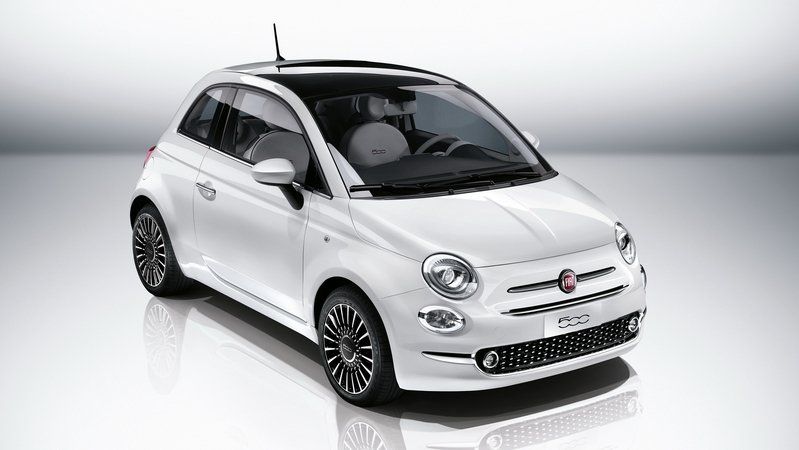
The car that has benefited most is the Fiat Panda, which has overtaken the Fiat 500 to become the segment's best-seller with a volume of 74,018 units across Europe, an increase of 21 percent.

Rising demand in Italy, as well as growth in Spain and Portugal, have boosted Europe's overall minicar segment by 3.8 percent after four months, but the sector (also called the A-segment) will level off at about 1.2 million annually from 2016 to 2020, analysts at IHS Automotive predict.
IHS believes that demand has stabilized following significant sales increases and decreases between 2009 and 2014. Minicar volume rose to more than 1.6 million in 2009, which is when small, affordable cars became even cheaper to buy because a number of European governments started offering trade-in incentives to support automakers during the height of the global financial downturn. The surge was followed by a decline to about 1.13 million minicar sales in 2013 and 2014 because so many purchases were pulled forward by the incentive offers.
Highs and lows
The recent highs and lows, the predicted flatness of the segment as well as the difficulty most automakers have had turning a profit from minicars has convinced manufacturers such as Ford Motor and Nissan to leave the sector.
Ford will end sales of the Ka after a two-decade run and offer a pair of vehicles in the subcompact segment: the Ka+ and the Fiesta. The Ka+, which is just a few millimeters shorter than the Fiesta, will be Ford’s entry model for Europe. The current Ka shared a platform and factory with the Fiat 500, but it never came close to matching the success of its sibling model. "Either you partner with someone in this segment or you’re out," said a Ford official, who didn’t want to be named.
The Ka+, which is 3929mm long compared with 3620mm for the current Ka, goes on sale in the autumn. Ford says the arrival of the Ka+ allows it to reposition the next-generation Fiesta more upmarket when it debuts early next year. Ford said it will drop the Fiesta's Ambiente base trim line to leave the subcompact segment's entry price level to the Ka+.
Disappointing sales of the Ka, which had a volume of just 12,975 units through April compared with 68,068 for the Fiat 500, was "partly our fault," said a Ford source who declined to be named. "Fiat really turned the 500 into its own brand and we could have done more with the Ka, too. But when you're completely focused on returning to profitability [which Ford of Europe did in 2015 after three years of losses], investing more time and effort into a segment that on good days barely makes money is just not a priority," the source said.
Nissan, meanwhile, is reluctant to rejoin the segment after dropping the India-built Pixo in 2013. "If you look at the volume and expected profit from those vehicles, I'm not convinced there's a significant place for an A-platform car in Europe," Trevor Mann, Nissan's chief performance officer, told Automotive News Europe. Nissan and alliance partner Renault have also said they don't plan to re-engineer the successful India-built Kwid for Europe.
Troubled Twingo?
Renault is struggling in the minicar segment with the rear-wheel-drive Twingo as sales of the car fell by 20 percent to 29,081 in the first four months, according to JATO's figures. The decline dropped the Twingo to fifth place behind the similarly aged Toyota Aygo. The dip came despite the popularity of minicars in Renault's home market of France, which ranks fourth in Europe behind Italy, the UK and Germany. French minicar sales rose 2 percent to 54,415 in the period.
Renault's expectations for the car haven’t been met, said IHS analyst Ian Fletcher. IHS reports that last year Renault cut a shift at its Twingo factory in Novo Mesto, Slovenia, where the car is built alongside its platform mate, the Smart ForFour. Fletcher believes some customer are put off by the Twingo's rear-engine design, which reduces trunk space. Another problem is that the Twingo is facing competition from its larger sibling, the Renault Clio. "Some deals Renault has at the moment don't put the Clio that far away from the Twingo [in price]," Fletcher said.
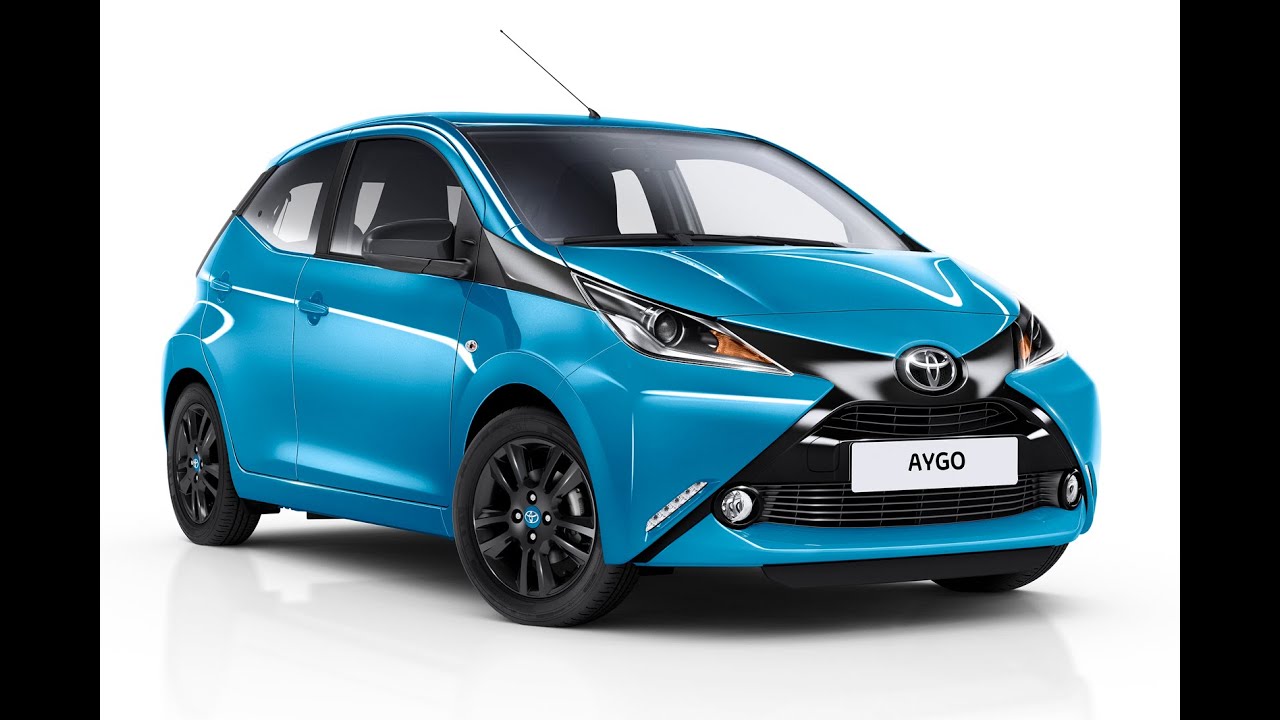
Sales of the Aygo, meanwhile, are holding up because Toyota is meeting strong demand for personalization options. "Customization in that segment is very, very popular," Toyota Europe CEO Johan van Zyl said on the sidelines of the Automotive News Europe Congress in Munich last month. The Aygo's wide choice of colors and features is attracting a younger crowd, van Zyl said.
Other automakers are adapting their models to try to win new buyers. Renault, for example, will launch a GT version of the Twingo later this year that boosts power from the car's 1.2-liter turbocharged gasoline engine to 110 hp compared with 90 hp for the base Twingo.
Volkswagen showed a face-lifted version of the Up at this year's Geneva auto show featuring a 1.0-liter turbocharged TSI gasoline engine for the first time, as well as a dashboard dock for a smartphone to create an inexpensive infotainment system via a VW app.
Meanwhile, Hyundai will use the Paris auto show in September to unveil a face-lifted version of its i10 minicar that has been redesigned to attract younger buyers, a company source said.
As the segment's sales level off minicars are expected to have a market share of about 9 percent within Europe, making it the region's third-largest segment after subcompacts and compacts.
That number won't be declining any time soon, JATO Dynamics global analyst Felipe Munoz said: "The segment will always appeal to a variety consumers: first-time car buyers, single people, or simply because of parking reasons," he said. "And it doesn't face direct competition from the SUV segment, at least not for now."
Nick Gibbs
Automotive News Europe

Monday, 23 March 2015

And Europes most reliable car is...... WHAT !!!!!!!! REALLY !!!!!!!!!!

British and French brands produce Europe’s most reliable cars, according to the latest research by Warranty Direct’s Reliability Index.
With the 85th Geneva Motor Show displaying the latest automotive technology closing its doors at the end of last week, Warranty Direct has revealed which are Europe’s most reliable models. The vehicles analysed were an average of five years old with mileages of around 50,000.
British brand, Vauxhall, topped the table with its diminutive Agila model the most reliable European-badged car on the road.

French manufacturers, Peugeot and Citroen completed the top three, with their similarly small 107 and C1 superminis.
Swedish, Spanish, German and Czech brands also won places in the top 10 reliability rankings with Volvo, SEAT, Volkswagen, Smart and Skoda.
Vauxhall’s Agila is most likely to incur issues with its axle and suspension, accounting for an average of 30% of its faults. The cooling and heating system is responsible for 44% of the Peugeot 107’s downtime; with fellow French carmaker Citroen finding most of the issues in its C1 derive from the electrics.
TEN MOST RELIABLE EUROPEAN CARS
CarRankWarranty Direct Average Reliability IndexMost Common Faults (Average % of faults)
Vauxhall Agila19Axle & Suspension (30%)
Peugeot 107218Cooling & Heating System (43.75%)
Citroen C1320Electrical (44.44%)
Volvo S40425Axle & Suspension (33.33%)
Peugeot 3008529Electrical (40%)
SEAT Ibiza630Axle & Suspension (25%)
Volkswagen Lupo730Electrical (57.14%)
Skoda Fabia832Electrical (34.62%)
Citroen Berlingo Multispace938Electrical (45%)
Smart Fortwo1050Engine (31.37%)
Volvo S40 drivers report more axle and suspension faults, with a third suffering complications. Warranty Direct’s data reveals Smart’s Fortwo most frequently faces engine issues, accounting for more than one in three of its breakdowns.
Warranty Direct managing director, David Gerrans, said: “It’s good to see a British manufacturer at the top of the table, especially at a time when Britain’s automotive industry is flying high. Our data also highlights that Swedish, Czech, Spanish and French carmakers are all more reliable than their often celebrated German counterparts, which will surprise some consumers, who may still assume that German cars are the most durable.”
At the other end of the scale, the Audi RS6 is Europe’s most unreliable vehicle, with data indicating it’ll break down at least once a year. Four out of the five most unreliable models are produced by German manufacturers.
FIVE LEAST RELIABLE CARS
CarRankWarranty Direct Average Reliability Index
Most Common Faults
(Average % of faults)
Audi RS611123Axle & Suspension (34.43%)
BMW M52766Electrical (29.47%)
Porsche 911 (996)3652Electrical (26.27%)
Bentley Continental GT4593Electrical (31.73%)
Mercedes-Benz CL5582Axle & Suspension (32.39%)
Warranty Direct’s Reliability Index score is calculated on a combination of vehicle criteria from a database of more than 50,000 live policies:
  • Frequency of failure
  • Cost of repair
  • Duration of repairs
  • Average age and mileage
The higher the Reliability Index score, the worse the car is – the lower the score, the better and the average RI number is 100.

Thursday, 5 June 2014

The design story of the new Peugeot 108.

With the arrival of the all-new PEUGEOT 108 in Dealerships from 1 July 2014, the Brand begins a fresh chapter in its small car design story.
With assertive new exterior styling, a chic ‘about town’ character and the choice of a TOP! Cabrio model with an electric fabric roof for the first time, the PEUGEOT 108 is a city car of distinction. Add in a contemporary and connectivity-oriented interior – plus a huge range of personalisation options inside and out – and the 108 simply oozes appeal.
At 3,470mm bumper to bumper, the car is 40mm longer than its predecessor, the much-loved PEUGEOT 107. The overall width remains the same (1,630mm), while the maximum roof height is 10mm lower (1,460mm).
The 108’s personality-packed exterior was chosen following an internal competition at parent company PSA’s Design Centre in Vélizy, near Paris.
Ivo Groën, PEUGEOT 108 Design Director, said the goal was to give the car a more premium and sophisticated feel, supporting the Brand’s move upmarket and helping differentiate the 108 from its siblings, the Citroën C1 and Toyota Aygo.

Groën explained: “The 107 had a very cab-forward ‘mono-volume’ silhouette, which at launch in 2005 was very modern. We wanted to give the 108 more of a nose and the powerful feeling that comes with that. We wanted to reduce the glass and increase the sculpting of the body, and at the same time give it a timeless elegance.”
He said his team discarded many designs in the quest for the right look, not because they were bad drawings but they didn’t fit with the brief.
The 108’s ‘nose’ is dominated by its reinterpretation of the ‘floating grille’ as seen on recent new models such as the PEUGEOT 208, 2008 and 308. All of the car’s extra length is at the front, improving its impact-protection credentials.
The grille is flanked by advanced bi-focal projector lamp headlights which, of the three sibling models, are unique to PEUGEOT. The hi-tech unit is one of the most compact automotive light clusters available on any car today. Similar technology can be seen on the PEUGEOT 3008 HYbrid, illustrating how premium components from the Brand’s larger vehicles are now appearing on its smallest model.
At the 108’s rear, the ‘lion claw’ lamps provide an obvious link to the rest of the PEUGEOT range. Between them, the lightweight all-glass hatch gives a very clean and contemporary look. The external hinges of the 107 are gone, hidden on the 108 by a sporty roof spoiler – standard across the range – which also houses the high-level brake light. This design feature also helps improve the car’s aerodynamic performance; the Cd value has come down from 0.34 on the 107 to 0.29 on the 108.
Available in three and five-door body styles, the 108’s cabin space is almost identical to the outgoing model. Where it is larger is in the boot, with a huge improvement in usable space. Cargo-carrying capacity has increased from 139 litres on the 107 to 196 litres in the 108.
The cockpit sees a marked improvement in material quality, fit and finish. The dashboard has been deliberately styled around the central stack, which includes a superb 7-inch touch-screen in all but entry level Access trim – expected to account for less than 5% of UK sales.
Ivo Groën, continued: “Connectivity was a key point for 108, which wasn’t the case with the 107 because no one had a smartphone. For 108 it’s about your smartphone but in the middle of the dashboard. We wanted a very simple design horizontally and to have the vertical interface with connectivity. Everything else was built around that.”
Depending on trim level and personalisation options, the 108 features a vibrant mix of a black upper dash, contrasting with gloss black, white, aikinite (bronze) and body colour elements.
The bright, easy-to-read main instrument binnacle is attached to the top of the rake-adjustable steering wheel housing and so moves with it for the perfect view. A multi-function steering wheel is standard on all but Access trim.
Integrated headrests remain a feature of the two front seats, which demonstrate even greater comfort, support and quality compared to the 107. The driver’s seat is now height-adjustable on all but Access trim, and on three-door models both front seats gain a memory function. This means they will always return to the same position when tilted forward to allow passengers into the rear.
The 108’s Design Director, Ivo Groën, concluded: “Throughout history Peugeots have been very simple and classy, but also sporty, dynamic and elegant. I believe we have achieved this with the Peugeot 108.”

Tuesday, 25 March 2014

Creating the ALL new Toyota Aygo.

The all-new Toyota Aygo was the big hit among the small cars unveiled at the Geneva motor show. With its radical new X-themed design, vast range of customisation opportunities, clever packaging and ground-breaking use of advanced on-board multimedia systems, it demonstrated how Toyota has gone beyond the qualities that made the original model such a long-lasting success to transform its presence in the city car/A-segment.

The team that delivered new Aygo had clear ambitions about what they wanted to achieve in the new car, one which stands a pathfinder for a new design direction that’s all part of Toyota’s missions to create ”ever better cars” that are fun to own and great to drive. Who better to hear from to understand new Aygo than the people who created it.

Product concept
Chief Engineer David Terai says new Aygo had to be much more than a practical run-about: “My main driver was to create a car that people would fall in love with.
“Traditionally the appeal of cars in the A-segment has come from their practicality and compactness, and their price tag. But all too often they lack desirability, the elements that make you truly want a car. Design is treated as secondary and there aren’t many equipment options to choose from.”
In taking this approach, Terai acknowledges that you won’t be able to please everyone.
“If you aim for an emotional link between customer and design, you have to accept that tastes differ. And in a crowded marketplace, it’s better to have a design that half the people absolutely love, rather than one that nobody objects to. That’s how new Aygo stands out,” he explains.

Design
“Pride of ownership is generated first and foremost by design,” says Nobuo Nakamura, new Aygo’s Chief Designer.
“Every time you look at your new car parked out front, you want to be reassured about the choice you’ve made. That’s why we didn’t accept any compromise when it came to styling.”
There’s no escaping the impact of new Aygo’s appearance, a look that’s been influenced by the bold shapes and forms of hip Japanese youth culture – tagged “J-Playful” by Toyota. But for all its compact size and appealing look, it’s no less robust – a balance that presented a big challenge to the design team.
“Designing a compact car like this isn’t easy. You want it to be loveable, but at the same time it needs to have proper street credibility. So it should look solid and strong, and have real road presence,” says Nakamura-san, adding that this called for some “tough choices”.

“For example, for the headlights to be narrow enough to sit within the X-graphic, they had to incorporate projector technology. This is exceptional in the A-segment, which tends to favour the cheaper, but larger reflector type. This is a good example of how we rejected compromise to end up with a better car.”
Where the interior’s concerned, there was a major focus on ergonomics, as David Terai explains: “We were mindful of the younger type of customer we see in the segment, so we improved the driving position by reducing the steering angle and lowering the front seat hip pint. We also equipped the driver’s seat with height adjustment, so finding your preferred position at the wheel should be easy.”
Customisation
Such is the wealth of customisation options for new Aygo, you’re unlikely to see two cars that are exactly same. Providing this degree of choice was another key element in defining new Aygo.
David Terai explains: “This was particularly important to me, firstly because customers have become used to a wide choice of colour and execution in many different things they buy and it’s time for the auto industry to catch up.
“Secondly, the ability to create very much your own Aygo is key to achieving the quality of desirability that I wanted for the car. Knowing that your car is somehow unique will make it all the more special to you.”

Powertrains
New Aygo retains a three-cylinder, 1.0-litre engine that in its past form has earned a string of international awards for its efficient performance. Now that unit, renowned also for its appealing character and distinctive rhythm, has been further developed to achieve even better fuel economy and (UK road tax/VED exempt) sub-100g/km CO2 emissions, but without resorting to technology that pushes up the price tag.
“We wanted to improve performance as well as economy – in the A-segment running costs are paramount, customers don’t want to spend a fortune on fuel bills,” says Terai-san.
“But at the same time, we didn’t want to resort to costly technology to reduce consumption, as this would have driven the vehicle price up too much. So our challenge was to come up with relatively simple yet clever ways to achieve our targets.”
Cue a long list of improvements to the 998cc engine, ranging from an increase in compression ratio, to a improvements in combustion chamber design and comprehensive measures to reduce friction and weight.

Tuesday, 4 March 2014

GENEVA - The Toyota AYGO is now officially launched after previous leaked images.

The new Aygo, revealed today at the Geneva motor show, is another example of Toyota’s commitment to build ever-better cars that catch the eye and are genuinely fun to drive. A distinctive and characterful design – dubbed J-Playful in reference to Japan’s hip youth culture – and a wealth of customisation options show how Toyota has made fun a key element in crafting its new city car.
At the same time new Aygo builds on the qualities that made the original such a success throughout its lifetime, keeping the car compact, nimble and reliable, with genuinely low running costs. The latter are supported by revision to its award-winning three-cylinder 1.0-litre VVT-i petrol engine to secure class-leading fuel economy and CO2 emissions.
Full details of the UK model range and prices will be announced nearer the on-sale date this summer.
Exterior design
Compact packaging was fundamental to the design new Aygo to maintain its town-friendly handling. The overall length has increased by just 25mm to 3,455mm, which means it keeps the class-leading compactness of the previous model, and although front headroom has been increased by 7mm, vehicle height has actually been reduced by 5mm to 1,460mm, supporting the car’s aerodynamic efficiency. Both front and rear tracks have been widened by 8mm.
New Aygo may be compact and characterful in appearance, but it’s robust and has real street presence too. Its solidity comes from a strong form which gives the design its core volume. But, to introduce a playful element, the designers used the concept of a soft object breaking through the hard shell of the design, creating break lines and giving Aygo its distinctive frontal X-graphic. This spreads outwards across the surface of the bodywork, and takes in all the vehicle’s main external features, including upper and lower grilles, headlamps, foglamps, and even mirrors and side glazing.
In profile, the roof has been lowered and the front header moved forwards. As a result, the cabin’s centre of gravity also shifts to the front, creating a more balanced and forward leaning posture. This is further emphasised by a sloping beltline which terminates in the forward leaning rear light clusters. The roof itself has a new pagoda-style profile and an integral rear spoiler. The shape of the side-glazing differs between the three and five-door models, the latter extending its window graphic into the rear light clusters, giving an impression of extra length..

The rear end displays a similar design theme to the front, with the tailgate and lower bumper forming break lines in the vehicle’s solid surface. The lamp clusters are set within the hexagonal tailgate, and the upper bumper section widens into pronounced wheel arches which give the car a broad and stable stance.
Interior design
The shape of the centre console – trapezoidal – sets the theme for new Aygo’s interior and is reflected in details such as the air vents, door trims and gear shift surround. The console supports a wide dashboard with a matt, anti-glare finish, set between slim A-pillars. The new instrumentation features a meter made of up concentric rings which are permanently lit. It incorporates an easy-to-read central multi-information display.
Although the wheelbase is unchanged at 2,340mm, the cabin is longer by 9mm, Wider armrests also improve comfort. There’s more room for luggage as well – an extra 29 litres – and loading is easier thanks to the space between the sill and rear seatback being made 5mm wider.
Customisation
One of new Aygo’s defining qualities is a wealth of affordable customisation options that will allow customers to create a car that’s truly individual. On the outside the X-shaped front grille, rear bumper insert, enhanced front bumper and alloy wheels can all be specified to suit, while in the cabin the instrument panel, centre console, air vents, shift knob and gear lever surround can easily be changed, even after years of ownership.
To make life simple, customers can also choose from a range of exterior and interior styling packs if they prefer, rather than selecting piece-by-piece customisation.
Multimedia x-touch system
New Aygo will be available with Toyota’s new x-touch multimedia system, operated using a fully integrated seven-inch touchscreen. It’s the first system in its segment to come with a rear view camera as standard.
It uses a five-function main menu, giving easy control of audio, phone (including sending and receipt of texts), connectivity, vehicle and journey information functions. Customers will also be able to access a wide choice of navigation and social media applications.
Powertrain
New Aygo features a comprehensively revised version of Toyota’s award-winning three-cylinder 1.0-litre engine. The unit has been re-engineered to run with a higher, 11.5:1 compression ratio, and has an improved combustion chamber design for better efficiency. Friction losses have also been reduced, notably by using a new low-friction timing chain. And although it’s still one of the lightest engines on the market, more weight has been saved by introducing a cylinder head with a built-in exhaust manifold.
There’s more power and torque: 68bhp (51kW) at 6,000rpm and 95Nm at 4,300rpm; 85Nm of torque is available from as low as 2,000rpm.
In making all these improvements, Toyota has been careful not to sacrifice the engine’s famous sprightly character. It will still rev happily to high speeds and although sound insulation has been improved, its sporty note is still there when pushed hard.
Extensive work has been done to improve aerodynamics, resulting in an improved drag coefficient – down from Cd 0.30 to 0.29.
Together these changes reduce combined cycle fuel consumption from 64.2 to 68.8mpg* and bring CO2emissions down to 95g/km*, below the 100g/km threshold for annual road tax (VED) exemption.
New Aygo will be offered with a five-speed manual transmission or optional new x-shift, a much-improved automated manual transmission that can be used in fully automatic mode, or with manual gear selection using paddle shifts or the shift lever itself.
When equipped with x-shift, new Aygo returns 67.3mpg* combined cycle fuel consumption and 97g/km* CO2emissions.
* Figures provisional prior to final homologation.
TECHNICAL Specifications
ENGINE New AYGONew AYGO
(with x-shift)
Type1.0 VVT-i1.0 VVT-i
Fuel TypePetrolPetrol
Valve mechanism4-valve DOHC4-valve DOHC
Displacement (cc)998998
Bore x Stroke (mm)71 x 8471 x 84
Compression ratio11.5:111.5:1
Max. power (bhp) kW @ rpm(68) 51 @ 6,000(68) 51 @ 6,000
Max. torque (Nm/rpm)95 @ 4,30095 @ 4,300
BRAKES
Front discs (mm)247 x 20247 x 20
Rear drums (mm)200200
SUSPENSION
FrontMacPherson strutMacPherson strut
RearTorsion beamTorsion beam
TRANSMISSION
TypeM/TMMT (x-shift)
PERFORMANCE
Max. speed (mph)9999
0-62 mph (sec)14.215.5
FUEL CONSUMPTION (subject to final homologation)
Combined (mpg)68.967.3
Fuel tank capacity (l)3535
CO2 EMISSIONS (subject to final homologation)
Combined (g/km)9597
VEHICLE WEIGHT
Curb weight (kg)840 – 890855 – 910
Gross vehicle weight (kg)1,2401,240

EXTERIOR DIMENSIONS
Length (mm)3,4553,455
Width (mm)1,6151,615
Height (mm)1,4601,460
Front overhang (mm)675675
Rear overhang (mm)440440
Wheelbase (mm)2,3402,340
Drag coefficient (Cd)0.290.29
Wheel Size (in)14 or 1514 or 15
Tyre size165/65R14 or 165/60R15165/65R14 or 165/60R15
INTERIOR DIMENSIONS
Interior length*1,630*1,630*
Interior width*1,250 (3-door)
1,300 (5-door)
1,250 (3-door)
1,300 (5-door)
Interior height1,205 (normal)
1,155 (canvas top)
1,205 (normal)
1,155 (canvas top)
Couple distance806806
Luggage space (l)168168
* from accelerator pedal to the rear seat hip point
The new Aygo, revealed today at the Geneva motor show, is another example of Toyota’s commitment to build ever-better cars that catch the eye and are genuinely fun to drive. A distinctive and characterful design – dubbed J-Playful in reference to Japan’s hip youth culture – and a wealth of customisation options show how Toyota has made fun a key element in crafting its new city car.

At the same time new Aygo builds on the qualities that made the original such a success throughout its lifetime, keeping the car compact, nimble and reliable, with genuinely low running costs. The latter are supported by revision to its award-winning three-cylinder 1.0-litre VVT-i petrol engine to secure class-leading fuel economy and CO2 emissions.
Full details of the UK model range and prices will be announced nearer the on-sale date this summer.
Exterior design
Compact packaging was fundamental to the design new Aygo to maintain its town-friendly handling. The overall length has increased by just 25mm to 3,455mm, which means it keeps the class-leading compactness of the previous model, and although front headroom has been increased by 7mm, vehicle height has actually been reduced by 5mm to 1,460mm, supporting the car’s aerodynamic efficiency. Both front and rear tracks have been widened by 8mm.
New Aygo may be compact and characterful in appearance, but it’s robust and has real street presence too. Its solidity comes from a strong form which gives the design its core volume. But, to introduce a playful element, the designers used the concept of a soft object breaking through the hard shell of the design, creating break lines and giving Aygo its distinctive frontal X-graphic. This spreads outwards across the surface of the bodywork, and takes in all the vehicle’s main external features, including upper and lower grilles, headlamps, foglamps, and even mirrors and side glazing.
In profile, the roof has been lowered and the front header moved forwards. As a result, the cabin’s centre of gravity also shifts to the front, creating a more balanced and forward leaning posture. This is further emphasised by a sloping beltline which terminates in the forward leaning rear light clusters. The roof itself has a new pagoda-style profile and an integral rear spoiler. The shape of the side-glazing differs between the three and five-door models, the latter extending its window graphic into the rear light clusters, giving an impression of extra length..

The rear end displays a similar design theme to the front, with the tailgate and lower bumper forming break lines in the vehicle’s solid surface. The lamp clusters are set within the hexagonal tailgate, and the upper bumper section widens into pronounced wheel arches which give the car a broad and stable stance.
Interior design
The shape of the centre console – trapezoidal – sets the theme for new Aygo’s interior and is reflected in details such as the air vents, door trims and gear shift surround. The console supports a wide dashboard with a matt, anti-glare finish, set between slim A-pillars. The new instrumentation features a meter made of up concentric rings which are permanently lit. It incorporates an easy-to-read central multi-information display.
Although the wheelbase is unchanged at 2,340mm, the cabin is longer by 9mm, Wider armrests also improve comfort. There’s more room for luggage as well – an extra 29 litres – and loading is easier thanks to the space between the sill and rear seatback being made 5mm wider.
Customisation
One of new Aygo’s defining qualities is a wealth of affordable customisation options that will allow customers to create a car that’s truly individual. On the outside the X-shaped front grille, rear bumper insert, enhanced front bumper and alloy wheels can all be specified to suit, while in the cabin the instrument panel, centre console, air vents, shift knob and gear lever surround can easily be changed, even after years of ownership.
To make life simple, customers can also choose from a range of exterior and interior styling packs if they prefer, rather than selecting piece-by-piece customisation.
Multimedia x-touch system
New Aygo will be available with Toyota’s new x-touch multimedia system, operated using a fully integrated seven-inch touchscreen. It’s the first system in its segment to come with a rear view camera as standard.

It uses a five-function main menu, giving easy control of audio, phone (including sending and receipt of texts), connectivity, vehicle and journey information functions. Customers will also be able to access a wide choice of navigation and social media applications.
Powertrain
New Aygo features a comprehensively revised version of Toyota’s award-winning three-cylinder 1.0-litre engine. The unit has been re-engineered to run with a higher, 11.5:1 compression ratio, and has an improved combustion chamber design for better efficiency. Friction losses have also been reduced, notably by using a new low-friction timing chain. And although it’s still one of the lightest engines on the market, more weight has been saved by introducing a cylinder head with a built-in exhaust manifold.
There’s more power and torque: 68bhp (51kW) at 6,000rpm and 95Nm at 4,300rpm; 85Nm of torque is available from as low as 2,000rpm.
In making all these improvements, Toyota has been careful not to sacrifice the engine’s famous sprightly character. It will still rev happily to high speeds and although sound insulation has been improved, its sporty note is still there when pushed hard.
Extensive work has been done to improve aerodynamics, resulting in an improved drag coefficient – down from Cd 0.30 to 0.29.
Together these changes reduce combined cycle fuel consumption from 64.2 to 68.8mpg* and bring CO2emissions down to 95g/km*, below the 100g/km threshold for annual road tax (VED) exemption.
New Aygo will be offered with a five-speed manual transmission or optional new x-shift, a much-improved automated manual transmission that can be used in fully automatic mode, or with manual gear selection using paddle shifts or the shift lever itself.
When equipped with x-shift, new Aygo returns 67.3mpg* combined cycle fuel consumption and 97g/km* CO2emissions.
* Figures provisional prior to final homologation.
TECHNICAL Specifications
ENGINE New AYGONew AYGO
(with x-shift)
Type1.0 VVT-i1.0 VVT-i
Fuel TypePetrolPetrol
Valve mechanism4-valve DOHC4-valve DOHC
Displacement (cc)998998
Bore x Stroke (mm)71 x 8471 x 84
Compression ratio11.5:111.5:1
Max. power (bhp) kW @ rpm(68) 51 @ 6,000(68) 51 @ 6,000
Max. torque (Nm/rpm)95 @ 4,30095 @ 4,300
BRAKES
Front discs (mm)247 x 20247 x 20
Rear drums (mm)200200
SUSPENSION
FrontMacPherson strutMacPherson strut
RearTorsion beamTorsion beam
TRANSMISSION
TypeM/TMMT (x-shift)
PERFORMANCE
Max. speed (mph)9999
0-62 mph (sec)14.215.5
FUEL CONSUMPTION (subject to final homologation)
Combined (mpg)68.967.3
Fuel tank capacity (l)3535
CO2 EMISSIONS (subject to final homologation)
Combined (g/km)9597
VEHICLE WEIGHT
Curb weight (kg)840 – 890855 – 910
Gross vehicle weight (kg)1,2401,240
EXTERIOR DIMENSIONS
Length (mm)3,4553,455
Width (mm)1,6151,615
Height (mm)1,4601,460
Front overhang (mm)675675
Rear overhang (mm)440440
Wheelbase (mm)2,3402,340
Drag coefficient (Cd)0.290.29
Wheel Size (in)14 or 1514 or 15
Tyre size165/65R14 or 165/60R15165/65R14 or 165/60R15
INTERIOR DIMENSIONS
Interior length*1,630*1,630*
Interior width*1,250 (3-door)
1,300 (5-door)
1,250 (3-door)
1,300 (5-door)
Interior height1,205 (normal)
1,155 (canvas top)
1,205 (normal)
1,155 (canvas top)
Couple distance806806
Luggage space (l)168168
* from accelerator pedal to the rear seat hip point