Purpose

I will try my best to provide detailed info on various cars and what is like to live with them, I have already produced a few for Jaguar-car-forums, I will do my best to be unbiased, but it will be hard for some cars. I will re-produce press releases and copy from other motoring news.
Showing posts with label emissions. Show all posts

Sunday, 7 August 2016

Volkswagen to add an all new Gasoline Particulate Filter to all its TSI and TFSI engines from 2017.

  • Emissions of soot particles from direct injection petrol engines can be reduced by up to 90 per cent
  • Planned roll-out in Group models as of 2017
The Volkswagen Group is continuing to work assiduously on the environmental compatibility of conventional drive systems. The company has now decided upon wide-scale use of particulate filters for petrol engines, so-called 'gasoline particulate filters (GPF)'. 

From 2017, all Group direct injection TSI and TFSI engines will be fitted step-by-step with petrol particulate filters. Emissions of fine soot particles will be reduced in this way by up to 90 per cent.
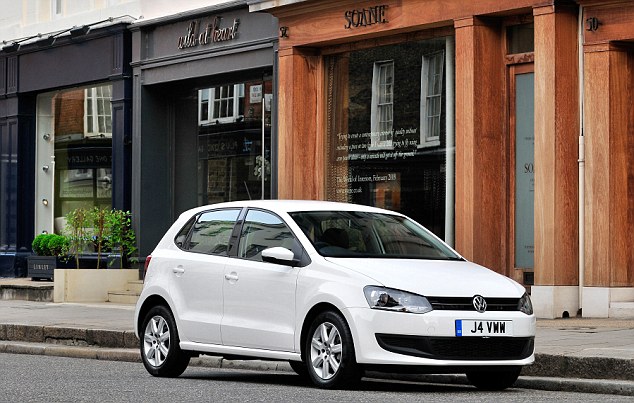
By 2022, the number of Volkswagen Group vehicles being equipped with this technology annually could reach seven million. The process is starting in June 2017 with the 1.4-litre TSI engine in the new Volkswagen Tiguan¹ and the 2.0 TFSI in the Audi A5². Implementation will then follow in further models and engine generations.
Particulate filters for diesel engines are already proven and established. The gasoline particulate filter will now reduce the particulate emissions of direct injection petrol engines by up to 90 per cent. Dr. Ulrich Eichhorn, Head of Group Research and Development: "Following increases in efficiency and lower CO₂ output, we are now bringing about a sustained reduction in the emission levels of our modern petrol engines by fitting particulate filters as standard."
Despite the outlay for complex exhaust gas treatment systems for new models, Volkswagen is determined to reduce its diesel vehicles' pollutant emissions as well. Eichhorn: "In the future, all models will be equipped with the latest and most efficient SCR catalytic converter technology."
Using comparative measurements, independent testing bodies have established that both modern EU 6 diesel engines and petrol engines from the Volkswagen Group are already the cleanest on the market. In its EQUA Air Quality Index, for example, London-based Emission Analytics looked at the world's 440 most popular models and ranked the Volkswagen Group as the top performer by some margin.
The company ranked first in three categories: EU 6 petrol engine, EU 5 petrol engine and EU 6 hybrid vehicles. The best six EU 6 diesel vehicles also come from Volkswagen, Audi and Skoda; among the EU 5 diesels tested, a total of five models in the top 10, including the top two from Audi and Skoda, are also from the Volkswagen Group.

Tuesday, 15 December 2015

Opel to voluntarily re-test all its models for CO2 and NOX emissions after issues were raised.

  • Engineering initiative for more transparency and credibility
  • From Q2 2016, Opel will start publishing WLTP cycle fuel consumption numbers for specific models reflecting more everyday driving conditions
  • Engineers developing improved SCR diesel applications – improvement towards RDE NOx specifications, including voluntary customer satisfaction field action
Opel is voluntarily taking the next step to meet future emissions guidelines, both on CO2 and NOx. From Q2 2016, and in addition to the official fuel consumption and CO2 information, fuel consumption numbers recorded under the WLTP cycle will also be published. In addition, diesel engineers have recently started working on an initiative to implement NOx emission improvements on SCR (Selective Catalytic Reduction) diesel applications. 

This is a voluntary and early improvement towards the so-called RDE (Real Driving Emissions) legislation that goes into effect in 2017. Opel is committed to providing the testing authorities transparency.
“The events and discussions in the last weeks and months have shown that there is a tremendous focus on the automotive industry and it is now time to act based on the learnings,” says Opel Group CEO Dr. Karl-Thomas Neumann. 
“It is obvious to me that the diesel discussion is a turning point. The world is not as it was before. We cannot ignore this and it is in the hands of the automotive industry to change the perception of the new reality.”
Fuel Consumption and CO2
From Q2 2016, and in addition to the official fuel consumption and CO2 information of Opel models, fuel consumption numbers recorded under the WLTP cycle will be published, starting with the new Astra. This procedure has broad industry acceptance and has been developed to be more representative of what customers will experience in use. 
According to EU plans, the “New European Driving Cycle” (NEDC) will be replaced starting in 2017 with the more modern standard “Worldwide Harmonized Light Duty Vehicles Test Procedure” (WLTP). 
The WLTP – also a test conducted in laboratory conditions – is based on stringent test procedures, more consistent with fuel consumption and CO2 emissions in real-life road traffic. This new test cycle is important to maintain standardized, reproducible and comparable results.
SCR Technology
Related to NOx emissions, Opel is also acting right now. The Rüsselsheim automaker has started working on improved solutions for the effectiveness of exhaust gas treatment systems in Euro 6 diesel engines with SCR technology to make improvements in the direction of future RDE guidelines. RDE is the real driving emissions standard which supplements current test methods and measures a car’s emissions directly on the road.
"Our analyses in the last months show that we have no devices that tell us if our vehicles are in a test cycle or not. 
Nevertheless, we also believe that we are capable of further improving the effectiveness of reduction of oxides of nitrogen emissions from our Euro 6 diesels with SCR technology and so we are making an improvement towards future RDE specifications,” emphasizes Dr. Neumann. “We will use SCR as the mainstream system for Euro 6 diesel going forward as we continue to develop improved technologies to explore higher efficiencies.”
The work on this Euro 6 SCR improvement has started and we expect a production implementation as of the summer of 2016. This activity will also include a voluntary customer satisfaction field action that will involve 43.000 vehicles that are already on the road in Europe (Zafira Tourer, Insignia and Cascada).These vehicles will get a new calibration once it becomes available.
Opel CEO Dr. Neumann also calls for improving the transparency between automakers and authorities in Europe. “In the USA, the companies disclose their complete calibration philosophy to authorities. I would like to see us embrace this practice in Europe.” 
In this context, the Opel CEO also wants to suggest that all automakers that are active in Europe take part in a negotiated agreement for more transparency.

Tuesday, 24 November 2015

Vauxhall responds to the panorama programme that states the Zafira is rigged, the BBC refuses to share info, WHY ?

TMW THOUGHTS

If there was in fact any issues with teh car that was tested, why is thet the BBC has refused to allow the brand to review the infomation, and to be informed of the way the test was set up, run and teh condition of the car that was used, maybe there is something in it that Vauxhall states it believes in wrong doing by the BBC, if there is nothing to hide, why refuse to allow the sharing of info ?????
----------
Vauxhall has clearly stated that its vehicles do not have any feature that detects that a vehicle is undergoing an emissions test, including any feature that would respond to wheels turning.
Vauxhall products comply with all regulatory requirements, including the in-service emissions testing program, according to EU rules. These requirements are periodically audited by the approval authority.
All Pictures below are used solely for illustrative purposes only and should not be considered to be part of, or inferred within the BBC Programme, Panorama - If there is any confusion, then just ignore the pictures.

We suspect that the vehicle tested (Zafira 1.6 diesel) was not performing correctly and/or the test execution was not correctly set up.  In order that Panorama did not potentially draw the wrong conclusions from their testing we requested full test reports and data from the testing including how the vehicle and test was set up, the technical state of the vehicle and details of the pre-conditioning of the vehicle which is necessary to achieve a stabilised condition for the test.
Panorama has refused to share information on the technical accuracy of the test prior to the broadcast.
When DUH tested the Zafira in Germany they were not willing to share their results before they went public.  We subsequently concluded that the campaign contained misleading elements. In response to the incorrect accusations of DUH we ran a full series of tests. Those tests proved that the Zafira 1.6 meets all the legal emission limits both in 2WD and 4WD roller testing. Those 4WD tests were conducted under the supervision of the TUV agency and officially protocolled.

Tuesday, 14 July 2015

SKODA to invests 11 Million Euro's to expand the Engine Centre at Mlada Boleslav

  • The investment is over 11 million; opened in July 2016
  • Å KODA expands Engine Center opened in 2014
  • Objective: to significantly reduce fuel consumption and emissions of new models of the brand
  • 31 Å KODA models are already below 100 g CO2 / km, and 103 below 120 g
  • 116 years of development and production of motors in Å KODA
Å KODA AUTO will build a new center in Mlada Boleslav emissions. In collaboration with the Volkswagen Group, the manufacturer will invest over 11 million euros in expanding Engine Center, opened in 2014. The inauguration of the new center is scheduled for July 2016. The new center will play a key role Emissions in reducing emissions from new Å KODA models in the coming years.
The first stone of 'Emissions Centre South' at the headquarters of the Centre for Development of Å KODA was laid in an official ceremony attended by Frank Welsch, a member of the Board of Å KODA, Jaroslav Povsik, union president Å KODA and others and representatives of Technical Development of the Volkswagen Group.


Of the more than 11 million total investment, 6.4 million will be spent on new construction, while nearly 5 million will be used to equip the center with the latest technology. 
In addition, the company has announced the creation of new jobs.
"In the coming years, Å KODA will continue to grow with new models," explains Frank Welsch, Head of Technical Development Board of Å KODA. "By developing new vehicles, look systematically reduce fuel consumption and emissions. 
Thus, the new Center of emissions is a key element in our growth strategy and other important investment for the Å KODA brand. We have developed and manufactured engines in Mlada Boleslav for 116 years, with the opening of the new Center of Emissions, the powers of the company in this area will be strengthened even further. "
As part of the development department thrusters Å KODA, the new Emissions Center is directly connected with the Center for Engines Mladá Boleslav, which opened in September 2014. These facilities, equipped with the latest measurement technology, Å KODA may quantify emissions from vehicles with gasoline or diesel as well as alternative fuel. 
The two stations will include completely new measurement called biaxial testers brakes, rollers and analysis systems. Initially, each set of tests can be performed up to 15 measurements daily broadcasts, which will be increased up to 25 measurements per day. The temperature range of tests is -40 to 65 degrees.
Sustainability and environmental protection are key elements in Å KODA's corporate strategy, which can be checked particularly clearly in the newly launched Skoda Superb. Thanks to the new lighter engines and optimized aerodynamics, the new model uses up to 30% less fuel and emits 30% less CO2 than its predecessor.
In Å KODA brand models 31 and manage CO2 emissions below 100 g / km, and 103 emit less than 120 g / km. In addition to the GreenLine and Green tec models, natural gas vehicles are a cornerstone of sustainable product strategy of the company. The Å KODA range includes two attractive models G-TEC: G-TEC Octavia and Octavia Combi G-TEC.
Å KODA path is clearly defined: green mobility must remain affordable; both for the benefit of customers and the environment. With the launch of the new Skoda Superb in late May, the manufacturer and rides his entire European range with modern and environmentally friendly engines EU-6. 
Currently, all Å KODA models are available with the latest gasoline and diesel engines, including the stop-start and brake energy recovery systems.
With the new Center for Emissions, Å KODA again strengthen its development capabilities. The manufacturer has the fourth largest development center for the entire Volkswagen Group, which is also one of the most advanced in the car industry. Å KODA is the only manufacturer in the Czech Republic not only produces vehicles and components, but also develops them. 
For this, the Technical Development department currently has around 1,700 specialists, engineers, designers and builders.
Å KODA has 116 years of tradition in the development and manufacture of propellers. In 1899, four years after the creation of the production company bicycles-, Å KODA's founders, Václav Laurin and Václav Klement (L & K) they added for the first time an auxiliary motor to one of their bicycle frames. 
In 1905, L & K developed the first automobile company under the name 'Voiturette A', powered by a water-cooled two-cylinder 7 hp and a displacement of 1,100 cc engine.

Sunday, 8 February 2015

PSA continues to drive down the corporate CO2 levels, taking back the crown for reducing emissions.

PSA Peugeot Citroën recaptured its first place standing in reducing emissions at end 2014 in Europe, with an average of 110.3 grams of CO2 per kilometre* (source: AAA DATA), compared with an average of 123.7 grams for the European market. Since 2008, the Group has gradually lowered its vehicle emissions by about 30 grams.

The new record illustrates PSA Peugeot Citroën's commitment to finding practical solutions to environmental problems. More than 50% of its R&D budget is devoted to developing technologies aimed at improving the fuel and environmental performance of its vehicles.

PSA Peugeot Citroën's top ranking is primarily the result of its engine downsizing strategy and the introduction of new PureTech 3-cylinder petrol engines, as well as the introduction of new-generation, fuel-efficient BlueHDi diesel engines. In 2014, nearly 30% of vehicles sold by the Group emitted less than 100 grams of CO2.

Paired with these highly efficient petrol and diesel engines, many Group models are low-carbon leaders in their category. Due to the fact that they represent a significant proportion of European sales, they contribute to an overall reduction in emissions.

The following models are examples of low-carbon leader vehicles:

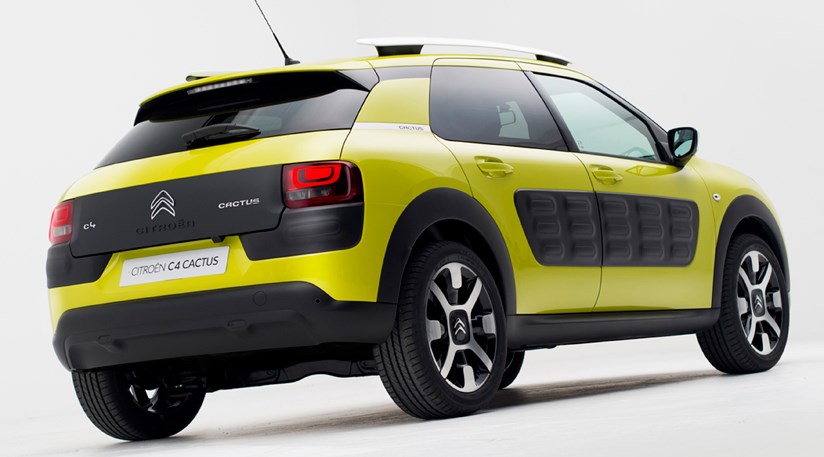
  • Citroën C4 Cactus, 1.6-litre BlueHDi, 100 hp, 82 grams of CO2 per kilometre
  • Citroën DS 3, 1.6-litre BlueHDi, 100 hp, 79 grams of CO2 per kilometre
  • Peugeot 308, PureTech 1.2-litre, 130 hp, 107 grams of CO2 per kilometre. 

This petrol version also set a new fuel economy record of 2.85 litres per 100 kilometres, covering 1,810 kilometres on a 51-litre tank of fuel.

The recent Peugeot 308 and Citroën C4 Picasso models (built on the new EMP2 platform) and the Citroën C4 Cactus (launched in 2014) weigh significantly less than their predecessors, by 140 kilograms and 200 kilograms, respectively, which is a key factor in reducing emissions.

"The outstanding reduction in CO2 emissions is the fruit of PSA Peugeot Citroën's advanced petrol and diesel engine technologies but also of its ongoing research to make lighter, more aerodynamic cars," said Gilles Le Borgne, Executive Vice President, Research and Development, PSA Peugeot Citroën. "The Group continues to invest heavily in research and innovation, particularly in the field of plug-in hybrid technologies and new-generation electric vehicles".

*Average homologated NEDC combined-cycle CO2 emissions of PSA Peugeot Citroën passenger cars registered in 2014 across 22 EU nations (excluding Greece, Croatia, Romania, Bulgaria, Cyprus and Malta).

Friday, 22 August 2014

European Union to stamp out laboratory fuel figures.

European Union regulators are preparing draft legislation that will require vehicle fuel use to be tested on roads rather than in laboratories, looking to close loopholes that allow carmakers to exaggerate fuel-saving and emissions credentials.
Already starting Sept. 1, slightly tougher EU testing standards will be enforced, in line with a global push for accuracy. More stringent standards are likely to be opposed by automakers.
EU research published last year showed that lab techniques, such as taping up car doors and windows and driving on an unrealistically smooth surface, explained around a third of a recorded drop in average EU CO2 emissions, linked to reduced fuel consumption.

An EU official, talking on condition of anonymity because he is not authorized to speak to journalists, said a proposal on "a new real-world testing method" was expected by the year-end. This would need to be endorsed by EU member states.
Other officials also said a proposal was expected over the coming months.
The Commission, the EU executive, says nitrogen oxide (NOX) emissions, linked to lung disease and hundreds of thousands of early deaths, have been miscalculated to a still-greater extent than CO2 levels.
"In the real world we have seen that NOX emissions are higher than indicated by the test, up to a factor 4 or 5 and exceptionally more," one EU official said.
No one from the European Commission was available for official comment, although the Commission has previously made clear its wish to tighten the testing regime.
A policy document published last year said "real-world" NOX emissions were roughly five times the EU limit, adding that had a major impact on pollution and generated "negative publicity and reputational damage for vehicle manufacturers."
Under the testing regime from Sept. 1, diesel models, which have been particularly blamed for NOX emissions, should emit no more than 0.08 gram (80 milligrams) of NOX per kilometer.
Environmental groups, independent researchers and the Commission say even in the new regime, loopholes mean such emissions will be higher.
The old tests, obsolete at the end of August, are based on a 0.180 g/km limit as part of a reduction from 0.5 g/km over 15 years.
Industry plan
The car industry has acknowledged the tests are flawed, but argues the Commission needs to be realistic. VDA, the lobby for the German car industry, said it was working on its own real-world testing proposal, which it would put before the Commission.
Already, the industry says, it has a major challenge to adapt to a law that the European Union agreed earlier this year, which enforces the world's toughest limits on carbon dioxide.
And it says it is too soon to set a 2025 standard on car CO2 emissions, which the Commission has also said it is working on, with a view to a policy announcement this year.

"Further targets should not be set prematurely for the period after 2021," VDA said in a statement. It said it was vital "industrial policy and climate protection targets have equal priority".
If the carmakers have reservations, some testers embrace change. Vehicle tester TUV Nord said it has been involved in Commission debate on the real-world tests, which will need member state approval under a fast-track EU process to become law.
Johnannes Berg, head of TUV Nord's Brussels office, told Reuters "real driving emission" tests would provide valuable data on fuel use and emissions.

Wednesday, 20 August 2014

Latest AUDI TT reduces emmisions and reduces whole life impact.

  • New TT benefits from emissions reduction of 11 per cent compared with predecessor
  • Power increase of up to 14 per cent
  • Customer benefits from the very first mile
Audi has made significant gains in reducing the whole-life impact on the environment of its latest high-tech sports car. Compared with its predecessor, the new Audi TT scores high with an increase in power output of up to 14 per cent and a simultaneous decrease in greenhouse gas emissions of 11 per cent. As the premium vehicle manufacturer states in its new life cycle assessment of the third-generation TT, this means that each car in the series saves around 5.5 tonnes of greenhouse gases over its entire life cycle. This includes not just carbon dioxide, but other substances such as methane, nitrous oxide and halogenated organic emissions.
“Our goal is to reduce significantly the overall emissions of each model compared with its predecessor,” states Prof. Dr. Ulrich Hackenberg, Board Member for Technical Development at AUDI AG. “However, it’s not just a matter of what comes out of the exhaust pipe. At Audi, we look at the entire product and process chain associated with mobility.”

A host of technologies have contributed towards the positive life cycle assessment of the Audi TT, including lightweight construction. Thanks to an intelligent combination of materials, Audi engineers have, for the second time in a row, succeeded in reducing the car’s unladen weight. The first model change in 2006 saw weight savings of up to 90 kilograms achieved. With the front-wheel driven 2.0 TFSI engine variant of the new TT now weighing in at just 1,230 kilograms, this means that the car is once again around 50 kilograms lighter than its predecessor.
Weight reduction and intelligent lightweight construction measures also have an impact on the vehicle manufacturing process. Here, it has been possible to reduce greenhouse gas emissions by around nine per cent, or 800 kilograms– a result that benefits the customers. The new TT generation offers a better life cycle assessment than its predecessor, right from the very first mile.
The life cycle assessment of the new Audi TT can be found here.