Purpose

I will try my best to provide detailed info on various cars and what is like to live with them, I have already produced a few for Jaguar-car-forums, I will do my best to be unbiased, but it will be hard for some cars. I will re-produce press releases and copy from other motoring news.

Monday, 15 May 2017

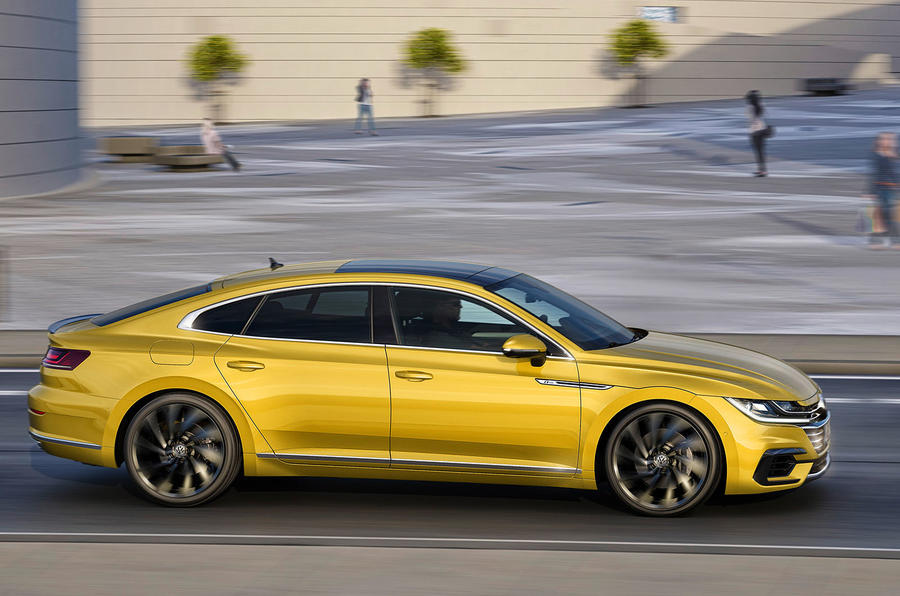
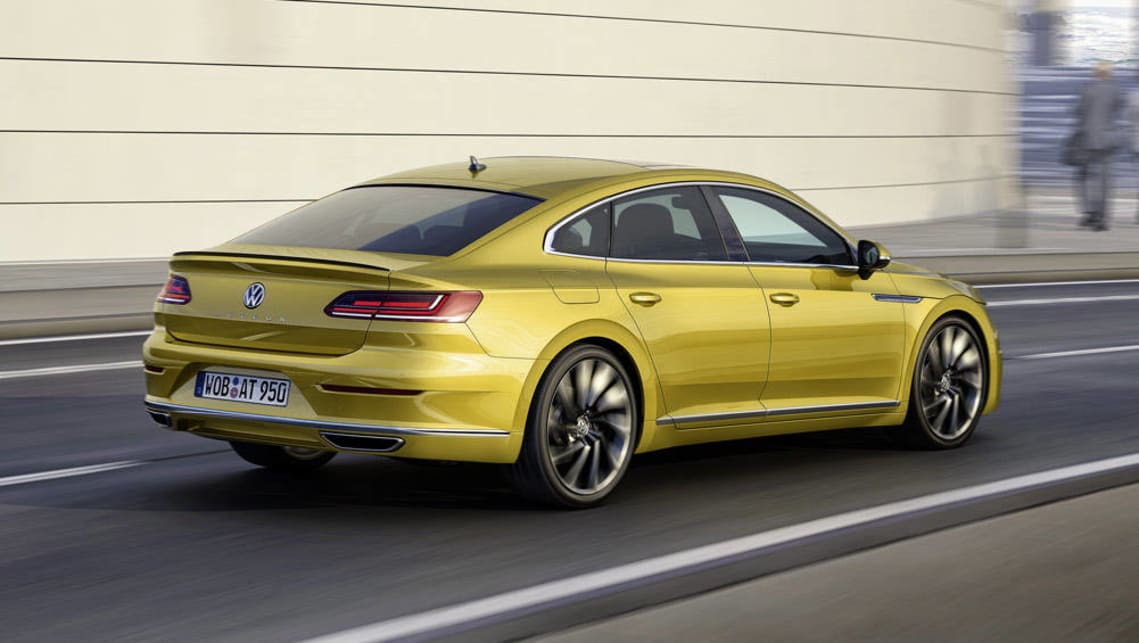
Volkswagen looks to the furture with the first post based on it's Innovative driver assistance systems.

Innovative driver assistance systems in detail – part 1: Emergency Assist – automatic help in emergencies.
  • Latest generation brakes and steers autonomously in an emergency
  • Innovative protection technology utilises four driver assistance systems
'Autonomous driving' – a term currently generating more animated discussion than almost any other in the automotive world. It fascinates and polarises in equal measure. The fact is: automated driving functions increase comfort and often safety as well.
The new Arteon is therefore fitted with more driver assistance systems than any Volkswagen before. These systems are interconnected with each other, as it is the interaction of their sensors and computers that actually makes autonomous driving functions possible. 
Through the fusion of four driver assistance systems, the Arteon possesses a form of technology that in many circumstances can help to prevent serious accidents: Emergency Assist 2.0. 
As soon as the sensors of the avant-garde gran turismo notice that the driver has become incapacitated, the Arteon takes over the proverbial helm. Within the bounds of its system capabilities, it warns other road users and automatically steers to the nearside lane, where it stops. 
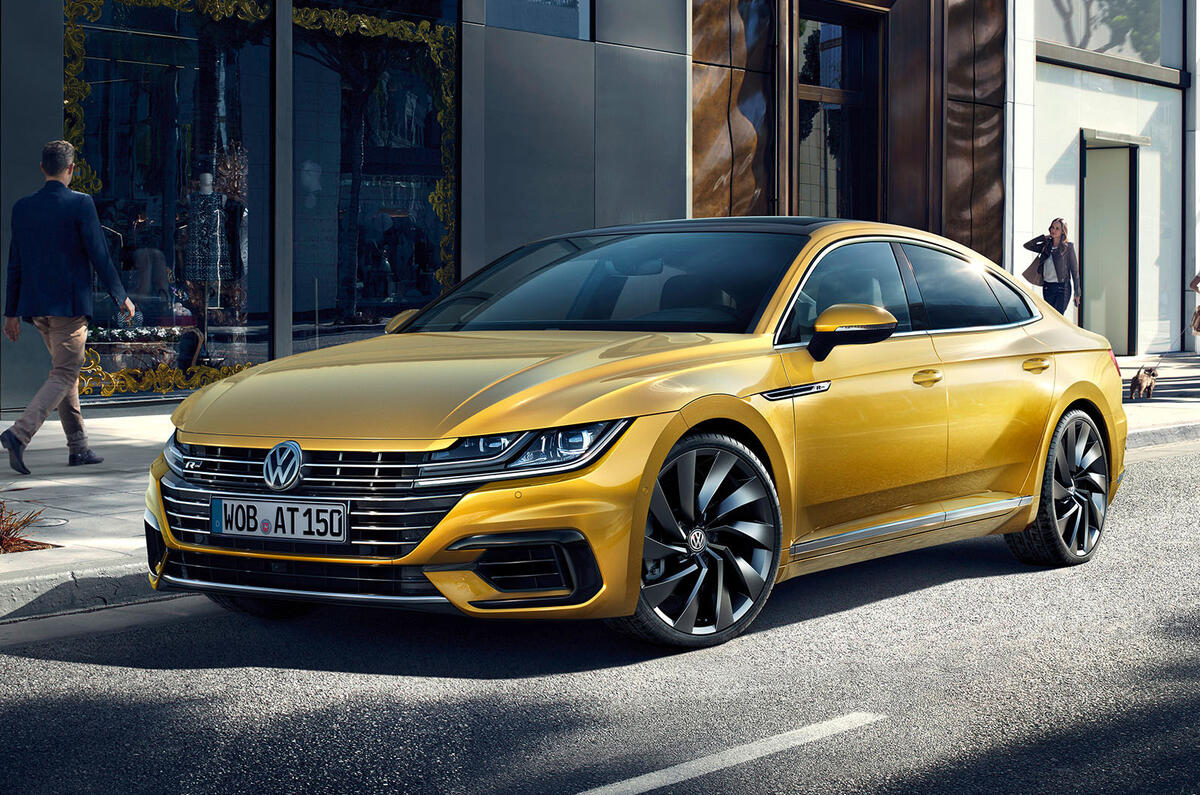
We call it a worst case scenario. Yet, through sudden ill health it can happen to anyone, regardless of age or physical condition: the driver suffers a blackout at the wheel. It is in these situations that the second-generation Emergency Assist system is able to take action. It merges ACC (Adaptive Cruise Control), Side Assist, Lane Assist and Park Assist into one system. This alliance is able – as mentioned above, within its technical system limits – to bring the car to a standstill in the nearside lane. 
This is how Emergency Assist works: as soon as the sensors recognise that for a defined length of time the driver has used neither the accelerator, brake nor steering wheel, the combined system initiates systematic countermeasures. First, the driver is warned and 'shaken out of their slumber' by acoustic, visual and physical (brake jolt) signals. If, however, they fail to react, Emergency Assist activates the emergency stop process outlined above. The hazard warning lights are then automatically switched on. In addition, via components of Park Assist (access to the electro-mechanical power-assisted steering) and Lane Assist (camera-based lane detection), the Arteon performs gentle steering manoeuvres in order to make drivers in nearby vehicles aware of the dangerous situation. 
Meanwhile, the ACC facilitates the automatic braking and contributes thanks to the radar sensors in the front of the car to preventing it from running into any vehicles up ahead. A new feature of Emergency Assist 2.0 is that on roads with multiple carriageways the Arteon steers itself in a controlled manner into the nearside lane. It is Park Assist and Lane Assist that enable it to do this, while Side Assist uses its ultrasound sensors to check on the traffic behind in order to minimise the risk of any collision when changing lane. 

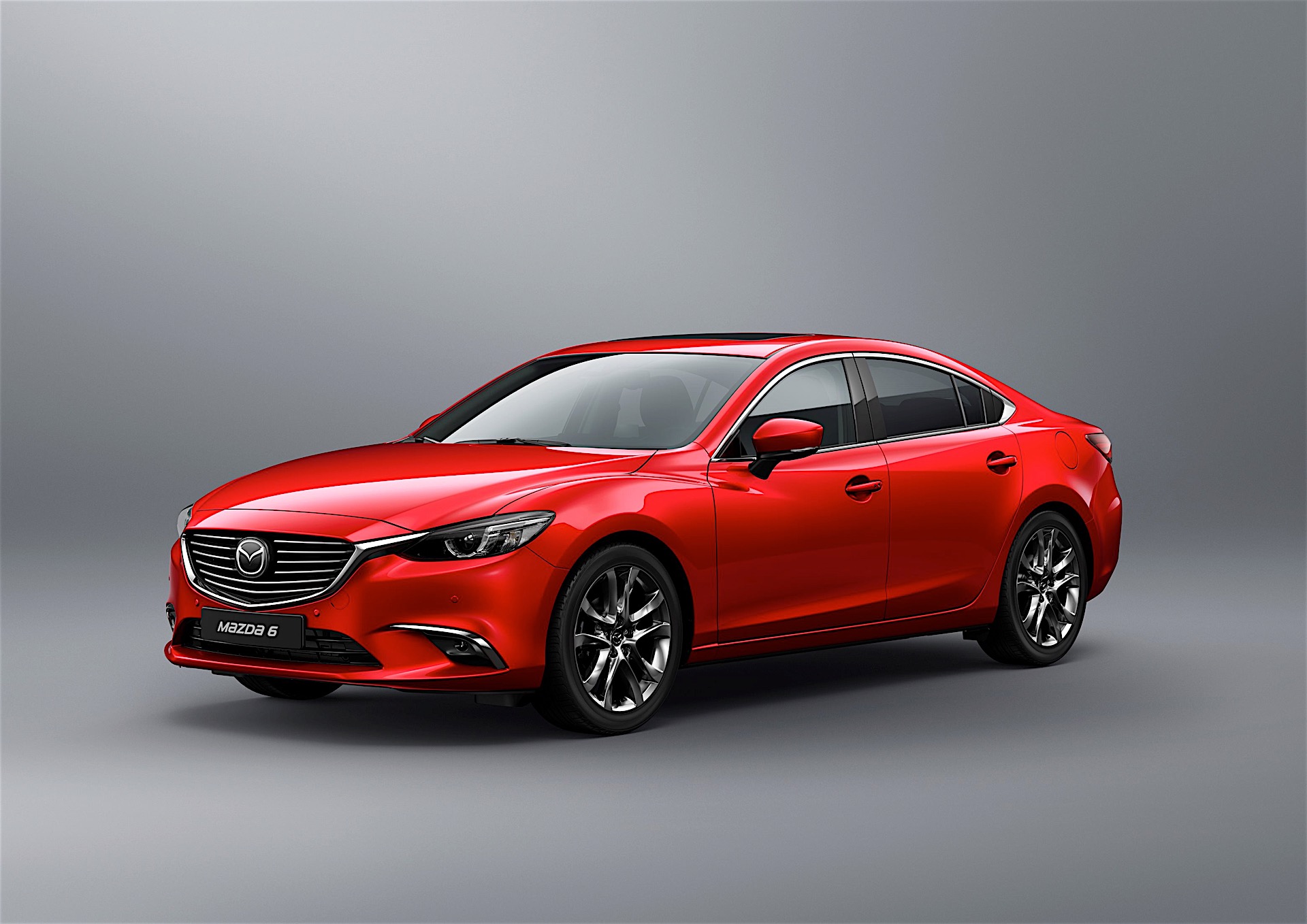
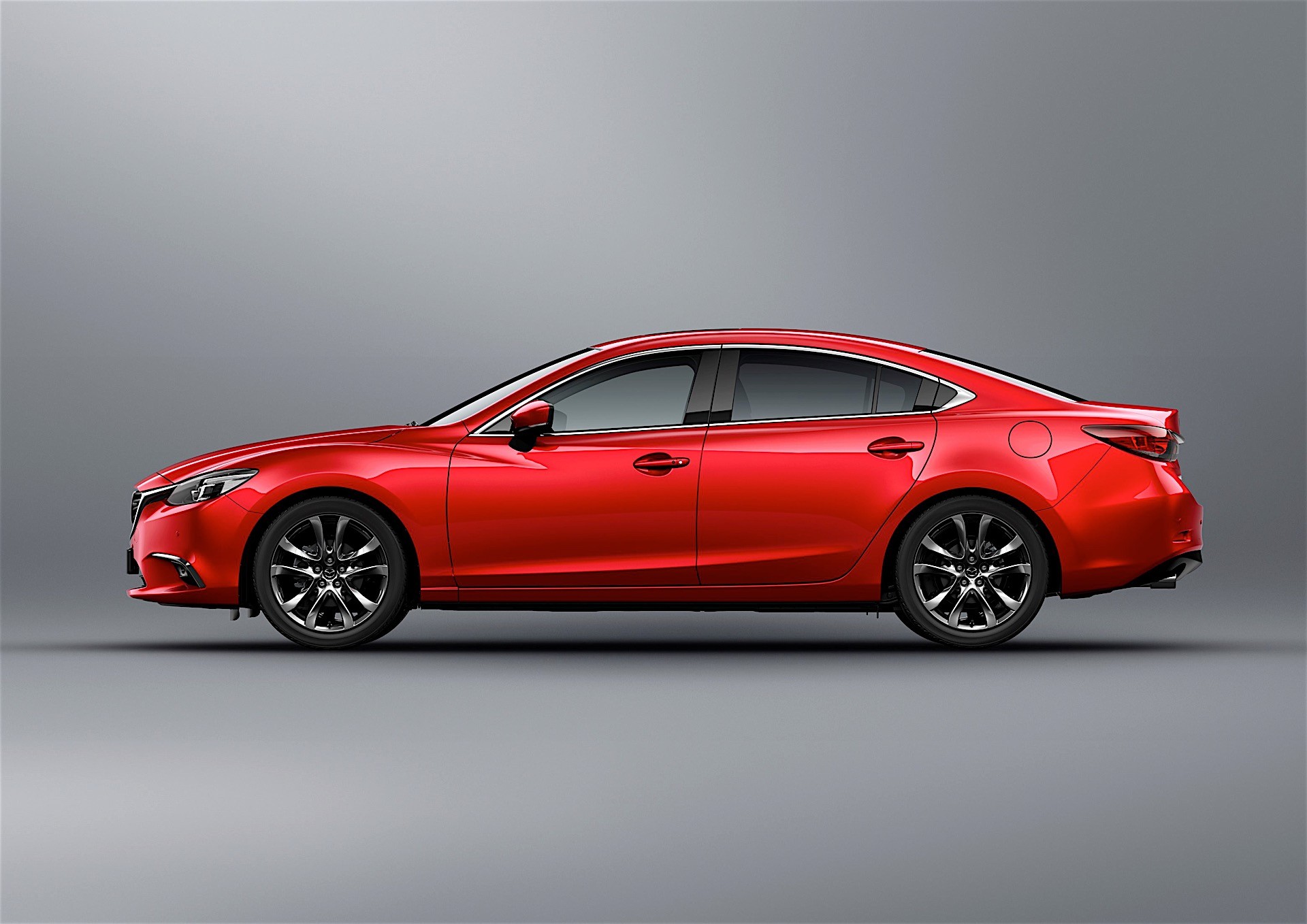
The Mazda6 Sedan celebrates it's fifteenth anniversary, updated to include more luxury.

Mazda6 has redefined the midsize sedan segment with superb driving dynamics, handsome design that stands out among its staid competition and craftsmanship that goes a step above expectations. It has charted its path as the family car for discerning drivers who need the practicality provided by a midsizer but refuse to give up on driving an engaging, enjoyable car.
Now in its third generation, Mazda6 celebrates its 15th anniversary since going on sale internationally, still setting the benchmark for its segment and for the Mazda brand.
Since 2002, Mazda6 has torn through the throngs of ubiquity that define its class and landed in the spotlight as the go-to for those desiring a better, if not more bespoke, option.
Immediately after going on sale in the U.S., Car and Driver magazine named Mazda6 to its 10Best list in 2003, stating that “…the Mazda6 is a spirited, athletic package that takes Mazda’s zoom-zoom ethos into the mainstream.”
Since then, Mazda6 has earned several other 10Best honors among dozens of awards, comparison wins and commendations for its outstanding safety, most recently being awarded both IIHS Top Safety Pick+ and NHTSA Five-Star ratings.
And, yet, Mazda6’s engineers and designers have never been good at leaving well enough alone.
In recent years, Mazda has made dozens of changes that further elevate it among its peers, no longer waiting for mid-cycle refreshes to make meaningful improvements. For 2015, Mazda6 received subtle refinements to what was already a well-received third-generation model after adopting KODO—Soul of Motion design and lightweight, efficient SKYACTIV Technology in its third generation. For 2016, its interior was completely redesigned, implementing a clean, modern design with the latest MAZDA CONNECTTM infotainment interface and segment-exclusive Active Driving Display head-up display technologies. The new interior won a Wards 10 Best Interiors award.
Starting in 2016, models equipped with available full-LED auto-leveling headlights also received a redesigned grille, headlights and tail lights.
For the 2017 model year, Mazda6 added many of the premium touches that were introduced in the all-new Mazda CX-9, including additional sound insulation by way of thicker door seals and laminated front glass and luxuries like available Nappa leather seating surfaces and rear USB charging ports. Mazda6 was also the first vehicle in the U.S. to include G-Vectoring Control, a Mazda-exclusive technology that uses throttle and steering inputs to smooth out steering feel, leading to greater confidence behind the wheel and more sure-footed handling.
Throughout its decade and a half, no matter which generation, Mazda6 has remained true to its mission, serving families who want a midsize car without compromise. Now, as in 2002, Mazda6 continues to over-deliver.
Accolades at a glance:
200310BestCar and Driver
2003All StarAutomobile Magazine
2004Best Family CarMoney Magazine
2008Car of the YearDetroit News
2009Best New CarsBusiness Week
2014Big Test Comparison WinnerMotor Trend
2014Top-Rated VehiclesEdmunds.com
2014Best Cars for FamiliesU.S. News and World Report
2014Top-Three FinalistNorth American Car of the Year
201410BestCar and Driver
201410 Best InteriorsWards Automotive
2014FinalistWorld Car Design of the Year
2015Five-Year Cost to Own AwardsKelley Blue Book
201510BestCar and Driver
2015Sedan of the YearAutobytel
201610 Best InteriorsWards Automotive
2016Comparison Test WinnerAutomobile Magazine
2016Top Safety Pick+Insurance Institute of Highway Safety
2017Best Family CarNew York Daily News Awards
2017Automotive Excellence AwardsPopular Mechanics
2017Top Safety Pick+Insurance Institute of Highway Safety
2017Most Beautiful Cars You Can Buy Right Now Under $50,000Car and Driver

USA - The gas powered Toyota RAV4 for 2017 comes in at prices lower than before.


Priced to please.  The wildly popular 2017 Toyota RAV4 Crossover just got better with new value-driven pricing that lowers the base Manufacturer’s Suggested Retail Price (MSRP) up to 5.0 percent on select gas models. 

The new price savings include the following price reductions:

  • $500 on all LE models;
  • $925 on all Limited models;
  • $1,195 on all SE models;
  • $1,330 on all XLE models. 

Base MSRP’s for RAV4 gas Platinum and all hybrid models remain unchanged.


In addition, RAV4’s value has been further enhanced with the launch of several new Value Packages, offering up great equipment at a discount through the end of the 2017 model year.

With more than 20 years under its belt, Toyota’s popular RAV4 continues to set the stage for the compact sport-utility segment, bringing high doses of value, style, and safety to discerning drivers.  
The 2017 RAV4 offers a bevy of standard-issue safety technologies with its Toyota Safety Sense P active safety package, and is the only vehicle in its (class/segment) to have a standard pre-collision system with pedestrian detection.
The Toyota Safety Sense P (TSS-P) driver assist system bundles cutting edge active safety technologies including:

  • Pre-Collision with Pedestrian Detection function (PCS w/PD) featuring forward collision warning and Automatic Emergency Braking,
  • Lane Departure Alert with Steering Assist function (LDA w/SA),
  • Automatic High Beams (AHB),
  • Dynamic Radar Cruise Control (DRCC).


The MSRP for the 2017 RAV4 does not include the delivery, processing, and handling (DPH) fee of $960.  The DPH fee for vehicles distributed by Southeast Toyota (SET) and Gulf States Toyota (GST) may vary.

The New priced for the 2017 Toyota RAV4 gas models are effective immediately.

Updated 2017 RAV4 Gas MSRP

Model #GradeDriveCurrent 17MY MSRPNew 17MY MSRPMSRP
Chg. ($)
MSRP
Chg. (%)
4430LEFWD$24,910$24,410($500)-2.0%
4440XLEFWD$26,830$25,500($1,330)-5.0%
4470SEFWD$29,985$28,790($1,195)-4.0%
4450LimitedFWD$31,830$30,905($925)-2.9%
4474PlatinumFWD$34,750$34,750$00.0%
4432LEAWD$26,310$25,810($500)-1.9%
4442XLEAWD$28,230$26,900($1,330)-4.7%
4472SEAWD$31,385$30,190($1,195)-3.8%
4452LimitedAWD$33,230$32,305($925)-2.8%
4476PlatinumAWD$36,150$36,150$00.0%

Ford's sporty models attract buyers of a lower age range than the normal models.

  • Buyers of Ford’s sporty Fiesta ST, Focus ST, Focus RS and Fusion Sport models are three to 10 years younger than buyers of non-performance variants of these vehicles; younger customers give automakers a better chance of winning over repeat buyers
  • These younger, performance-hungry customers are also more affluent; the annual income of Fiesta ST and Focus ST customers is approximately 70 percent higher than that of regular Focus and Fiesta variants
  • Ford’s sporty car sales jumped 45 percent for the first quarter of 2017, bucking the trend of the overall U.S. industry that is seeing consumers shift from cars to SUVs
Customers of Ford’s sporty cars are not just young at heart; they’re actually younger on average, and more affluent, according to New Vehicle Customer Study data from MaritzCX.
Nowhere is this trend more evident than with Ford Fiesta ST. While the average age of a new Fiesta buyer is 45 years old, the average age of a Fiesta ST customer is a good 10 years younger. Buyers of Ford Focus follow the same pattern; the average age of a regular Focus buyer is 46, while the Focus RS customer is 41 on average and the Focus ST buyer is 36. Fusion customers are 48 on average, while Fusion Sport buyers are an average 45 years old.
These millennial buyers are important to Ford. Not only are they contributing to a significant increase in sporty car sales – a 45 percent increase for the first three months of the year – younger customers give the automaker a greater chance of winning over repeat buyers.
“With repeat customers making up around half of industry sales, capturing younger buyers while they still have many vehicle purchases remaining in their lives is good for business,” said Corey Holter, Ford car group marketing manager.
Millennial customers arrive at dealerships with money to spend. While household income for the average Fiesta buyer is $59,000, for Fiesta ST, that figure jumps to $102,000. The average Focus buyer has a household income of $63,000, while Focus ST and Focus RS customers show markedly higher household incomes – on average, $108,000 and $169,000, respectively (data for Focus RS is limited and not statistically significant).
And with car segments on the wane industrywide as buyers shift toward SUVs and crossovers, sales of Ford’s hot hatchbacks – Fiesta ST, Focus ST and Focus RS – are continuing to buck the trend, as the company reported late last year.
An interesting side note to this is that all of the performance models are EcoBoost®. In the case of the Fusion, many buyers opt for EcoBoost engines in non-performance vehicles, but even the EcoBoost Mustang has a younger buyer on average (41 years old) compared to non-EcoBoost Mustangs (44 years old).

The 2017 Alfa Romeo Giulia Quadrifoglio has collected a couple of new awards.

Giulia Quadrifoglio takes home top honors from Texas Auto Roundup at Circuit of The Americas

  • 2017 Alfa Romeo Giulia Quadrifoglio named “Car of Texas” and “Performance Sedan of Texas” and took home “Most Drives” honor
  • As the lineup’s “halo” model, Giulia Quadrifoglio highlights Alfa Romeo’s performance and motorsports knowhow with best-in-class 505 horsepower, 0-60 miles per hour (mph) in 3.8 seconds and a record-setting 7:32 lap time around the legendary Nürburgring – fastest ever by a four-door production sedan
  • The heart of the Quadrifoglio is the all-new, all-aluminum direct injection 2.9L twin-turbo intercooled V-6, producing 505 horsepower and 443 lb.-ft. of torque, and is what makes the Giulia Quadrifoglio the most powerful Alfa Romeo production car ever
  • With muscular proportions, simplistic elegance and high-quality surface finishes across its generous wheelbase, the 2017 Giulia Quadrifoglio exudes stunning Italian style with a finesse of Alfa Romeo heritage, athletically taut lines, sculptural details and best-in-class aerodynamics
  • 2017 Alfa Romeo Giulia Quadrifoglio is available now with a U.S. Manufacturer’s Suggest Retail Price (MSRP) of $72,000
  • Alfa Romeo has more than 105 years of brand heritage, carving its legend on road courses around the globe
The all-new 2017 Alfa Romeo Giulia Quadrifoglio was crowned “Car of Texas” and also took home honors for “Performance Sedan of Texas” and “Most Drives” at the Texas Auto Roundup hosted by the Texas Auto Writers Association (TAWA) at Circuit of The Americas (COTA).
“The Giulia Quadrifoglio took to the track at Circuit of The Americas and thoroughly impressed our journalists with its nimble handling, compelling Ferrari-derived 505-horsepower V-6 engine along with its true Italian flair,” said Nic Phillips, President of TAWA. “Alfa Romeo has created something original, something extraordinary in just about every measure with the Giulia Quadrifoglio – one of those cars you have to experience to believe – whether you’re on the track or looking for a smile-inducing drive to work, this sedan delivers it all and quite comfortably at that.”
With its 20 turns, 133-foot hill and a coned-slalom segment in the straightaway, the 3.4-mile track at COTA provided a world-class driving experience for evaluating vehicles in side-by-side comparisons unlike any other automotive media event. A total of 52 TAWA journalists attended and drove 42 vehicles during the two-day event.
As the first of a new generation of vehicles built on the all-new Giorgio platform, the 2017 Giulia Quadrifoglio embodies Alfa Romeo’s La meccanica delle emozioni (the mechanics of emotion), delivering race-inspired performance, advanced technologies, seductive Italian style and an exhilarating driving experience to the premium mid-size sedan segment.
Bearing the iconic Quadrifoglio badge (a four-leaf clover encased in a white triangle), which has adorned all Alfa Romeo performance models, the all-new Giulia Quadrifoglio embodies the essence of Alfa Romeo’s racing legacy. The beating heart of this ultra-high-performance sedan is an all-aluminum direct-injection 2.9-liter twin-turbo intercooled V-6 engine, delivering a best-in-class 505 horsepower, as well as earning the title of the most powerful Alfa Romeo production car engine ever and the quickest with a class-leading 0-60 miles per hour (mph) acceleration in 3.8 seconds. Combined with an 8-speed automatic with steering column-mounted aluminum paddle shifters, with shifts in less than 100 milliseconds, the culmination of these performance attributes is a record-setting time at the Nürburgring of 7:32, making the Giulia the fastest four-door production sedan in the world.
The Giulia Quadrifoglio achieves these unprecedented figures with exclusive enhancements for ultimate performance. The Giulia Quadrifoglio is composed of a carbon-fiber hood and roof, rocker panel moldings, rear deck-lid spoiler, along with segment-exclusive carbon fiber drive shaft and active aero front splitter. The lightweight construction of carbon fiber combined with the Giulia’s aluminum body components create maximum weight savings that contribute to the near perfect 50/50 weight distribution. The 2.9-liter twin-turbo V-6 supplies its 505 horses to the 19-inch staggered aluminum wheels (19 x 8.5-inch front and 19 x 10-inch rear), wrapped with Pirelli P Zero Corsa three-season high-performance tires. Combined with a torque vectoring differential, the Giulia Quadrifoglio delivers increased performance in every corner and on every straight away.
Yet, the Giulia Quadrifoglio’s luxurious performance is highlighted not only in its physical power, but also from its sleek, rich Italian interior design. The interior features sport seats adorned with high-performance leather and Alcantara, power bolsters, leather-wrapped dash and doors with accent stitching, 3-spoke flat-bottom steering wheel featuring a performance red push button start, carbon-fiber interior trim, aluminum sport pedal and footrest, 8-inch widescreen 3D Navigation on a hidden infotainment screen, Alfa’s DNA Pro Drive Mode Selector featuring RACE mode, as well as safety features including passive entry, blind-spot monitoring, back-up camera, front and rear park sensors, and much more.
Expanding Alfa Romeo’s lineup beyond the ultra-high performance Giulia Quadrifoglio, the Giulia and Giulia Ti models (with MSRPs of $37,995 and $39,995, respectively) exude stunning and functional Italian style with a finesse of Alfa Romeo heritage, athletically taut lines and sculptural details.
The all-new 2017 Alfa Romeo Giulia and Giulia Ti models exude Italian style, craftsmanship and performance, all while delivering a comprehensive list of standard features, including an all-new, all-aluminum 2.0-liter direct-injection turbo engine with eight-speed automatic transmission delivering a class-leading, standard 280 horsepower, class-exclusive carbon fiber driveshaft, dual exhaust system with bright tips, leather seating, 7-inch full-color TFT, a 6.5-inch or 8.8-inch industry-first hidden widescreen infotainment display, Alfa DNA Drive Mode Selector with Dynamic, Natural and Advanced Efficiency vehicle behavior modes, sport-inspired flat-bottom steering wheel with integrated push button start, along with keyless-go with passive entry and remote start.
The intelligent Q4 all-wheel-drive system – available on Giulia and Giulia Ti – delivers even more all-season traction and performance capability, thanks to the system’s ability to transfer up to 60 percent of the engine’s torque to the front axle.

Friday, 12 May 2017

USA SALES APRIL - AUDI - the German luxury brand is now running at 76 months of growth.

  • Q5 SUV sales increased 26 percent to 5,028 vehicles
  • Sales of Q7 rose 22 percent; Second-best month for flagship SUV
  • Consumer demand for A4 sedan increased 9 percent; A5 sales up 24 percent
Audi of America’s April sales increased 5 percent to 18,711 vehicles, a record. Demand was strong across the product lineup, with the Q5, Q7 SUVs and the A4 sedan leading the volume gains.
It was the best April sales result for Audi in the U.S., marking the brand’s 76th straight monthly record. The previous April record was set last year with 17,801 vehicles sold. Through the first four months of 2017, Audi sales have risen 8 percent to 64,358 vehicles.
April results were bolstered by strong demand across the brand’s SUV lineup, with total sales in the segment increasing 18 percent over last April and 19 percent year-to-date. 
The newly launched Q5 led the gains with 5,028 vehicles sold, an increase of 26 percent. Sales of the Q7 rose 22 percent over last year to 3,022 vehicles, the second-best month on record for the model. The Q3 posted 1,510 sales for the month.
Consumer demand for A4 and A5 models was also strong. The A4 sedan posted sales of 3,246 vehicles, a 9 percent increase for the month and a 20 percent gain year-to-date. A4 allroad sales jumped 61 percent to 236 vehicles. The A5 recorded 1,007 deliveries in April, an increase of 24 percent from last year.
“Customers are responding well to our new products,” said Mark Del Rosso, chief operating officer, Audi of America. “With the new Q5 in full force and the new A5, we have much cause to be optimistic that our product offensive will position us well for continued growth this year.” 

AUDI US SNAPSHOT
--MTD--
--YTD--
Model Line
Apr '17 Actual
Apr '16 Actual
Yr/Yr % change
Apr '17 YTD  Actual
Apr '16 YTD Actual
Yr/Yr % change
A3
1,803
2,548
-29.2%
6,691
9,145
-26.8%
A3 e-tron
301
321
-6.2%
1,502
1,228
22.3%
A4
3,246
2,983
8.8%
11,236
9,361
20.0%
A5
1,007
813
23.9%
2,318
2,714
-14.6%
A6
1,508
1,619
-6.9%
5,186
4,977
4.2%
A7
459
543
-15.5%
1,885
2,009
-6.2%
A8
291
330
-11.8%
1,084
1,315
-17.6%
allroad
236
147
60.5%
814
597
36.3%
Q3
1,510
1,635
-7.6%
5,612
5,030
11.6%
Q5
5,028
3,991
26.0%
16,340
12,831
27.3%
Q7
3,022
2,472
22.2%
10,570
9,465
11.7%
R8
102
96
6.3%
301
123
144.7%
TT
198
303
-34.7%
819
966
-15.2%
Total Audi Sales
18,711
17,801
5.1%
64,358
59,761
7.7%
Total CPO Sales
4,060
4,055
0.1%
15,024
15,386
-2.4%

NOTES:
- A3 includes A3 Sedan, S3 Sedan and A3 Cabriolet, but does not include A3 Sportback e-tron.
- A4 includes A4 Sedan and S4 Sedan, but does not include A4 allroad.
- A5 includes A5 Coupe, S5 Coupe, RS 5 Coupe, A5 Cabriolet, S5 Cabriolet and RS 5 Cabriolet.
- A6 includes A6 Sedan and S6 Sedan.
- A7 includes A7 Sedan, S7 Sedan and RS 7 Sedan.
- A8 includes A8 Sedan, A8 L Sedan and S8 Sedan.
- Q5 includes Q5 and SQ5.
- R8 includes R8 Coupe and R8 Spyder.
- TT includes TT Coupe, TTS Coupe and TT Roadster.